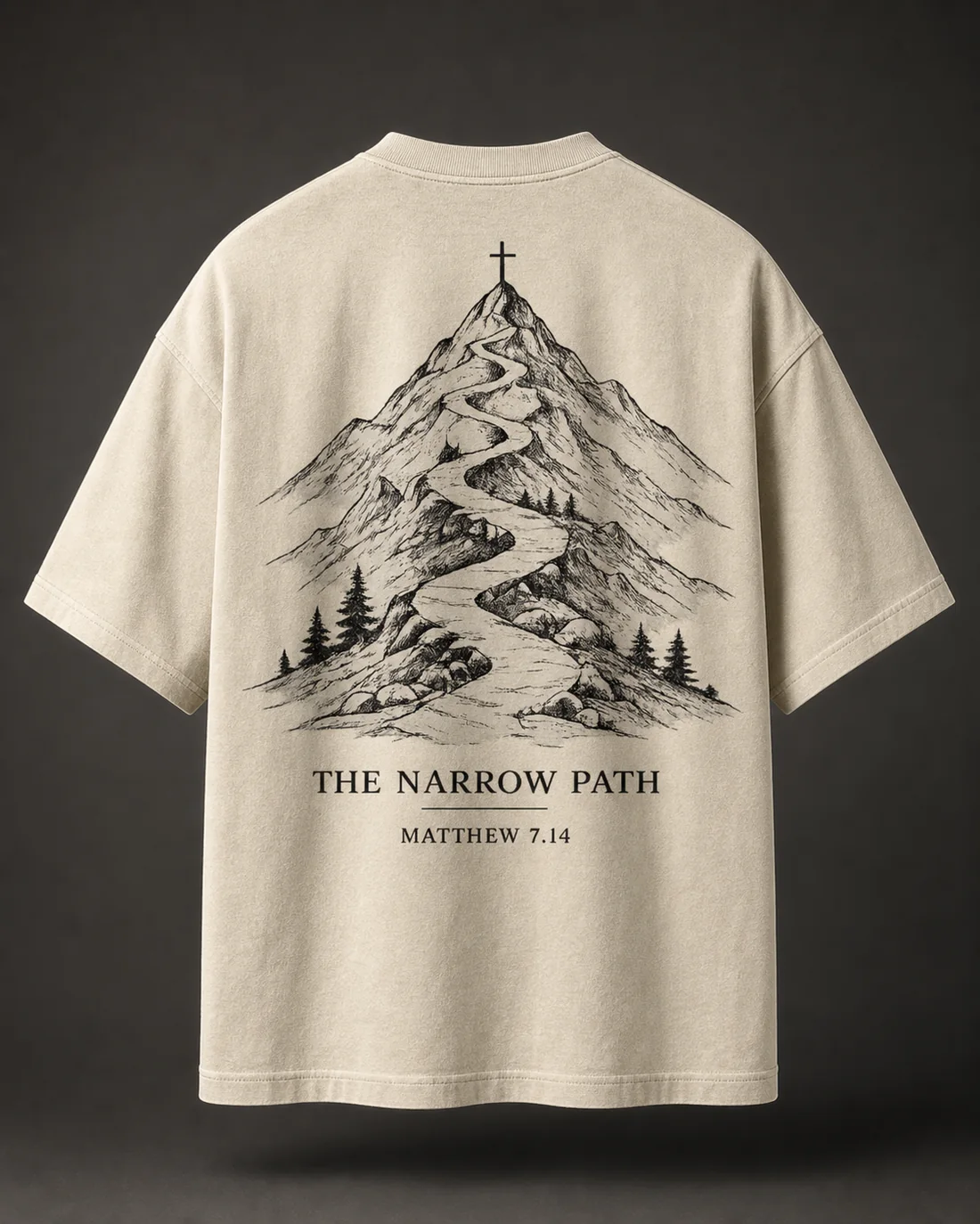
 DROP 01 · TEE
Matthew 7:14 · Bone
The Narrow Path Tee
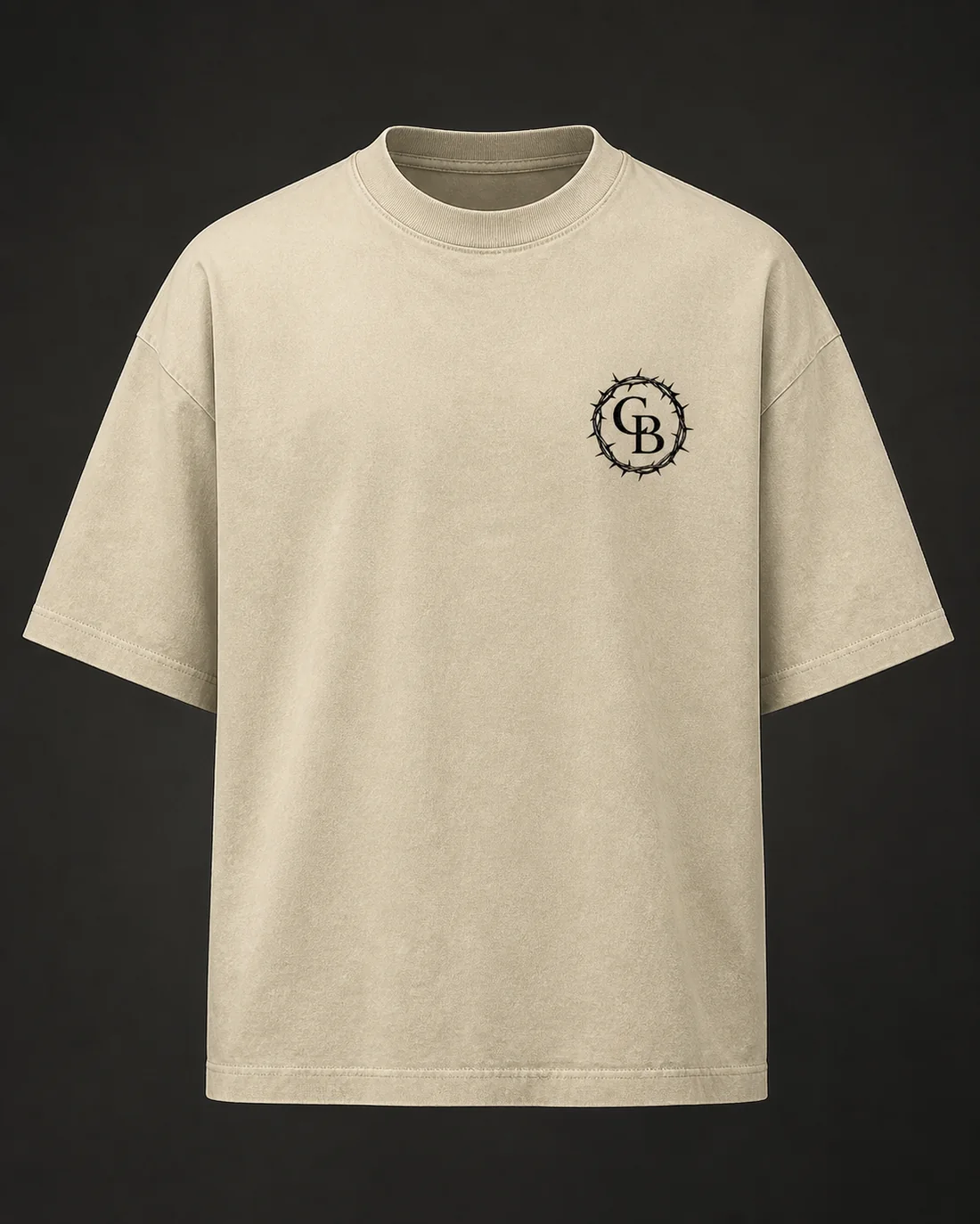
Thorn crest on the chest, the full mountain on the back. Heavyweight garment-dyed cotton, one-color engraving.
$30
Walk With Purpose
Wearable conviction for the ones who chose the narrow path.
Volume I — The Pilgrim · Eight Drops
Shop the DropFor we walk by faith, not by sight.II Corinthians 5:7
The Reason
Most apparel is decoration. This isn't. Every Crossbound piece is built around a single line of Scripture — engraved, not printed on; earned, not slapped across a chest. The art is 19th-century woodcut. The ink is one color. The weight is heavy.
We made it for the young man who already knows the road is hard and picked it anyway. "What does that mean?" is the entire engine. One question, one conversation, one verse handed over in a hallway. That's the whole business model — and it's older than any of us.
Nothing loud. Nothing cheap. No neon, no slogans, no fish stickers. Premium garment-dyed cotton with a mark that reads as heritage before it reads as Christian — so it gets worn, and being worn is the point.
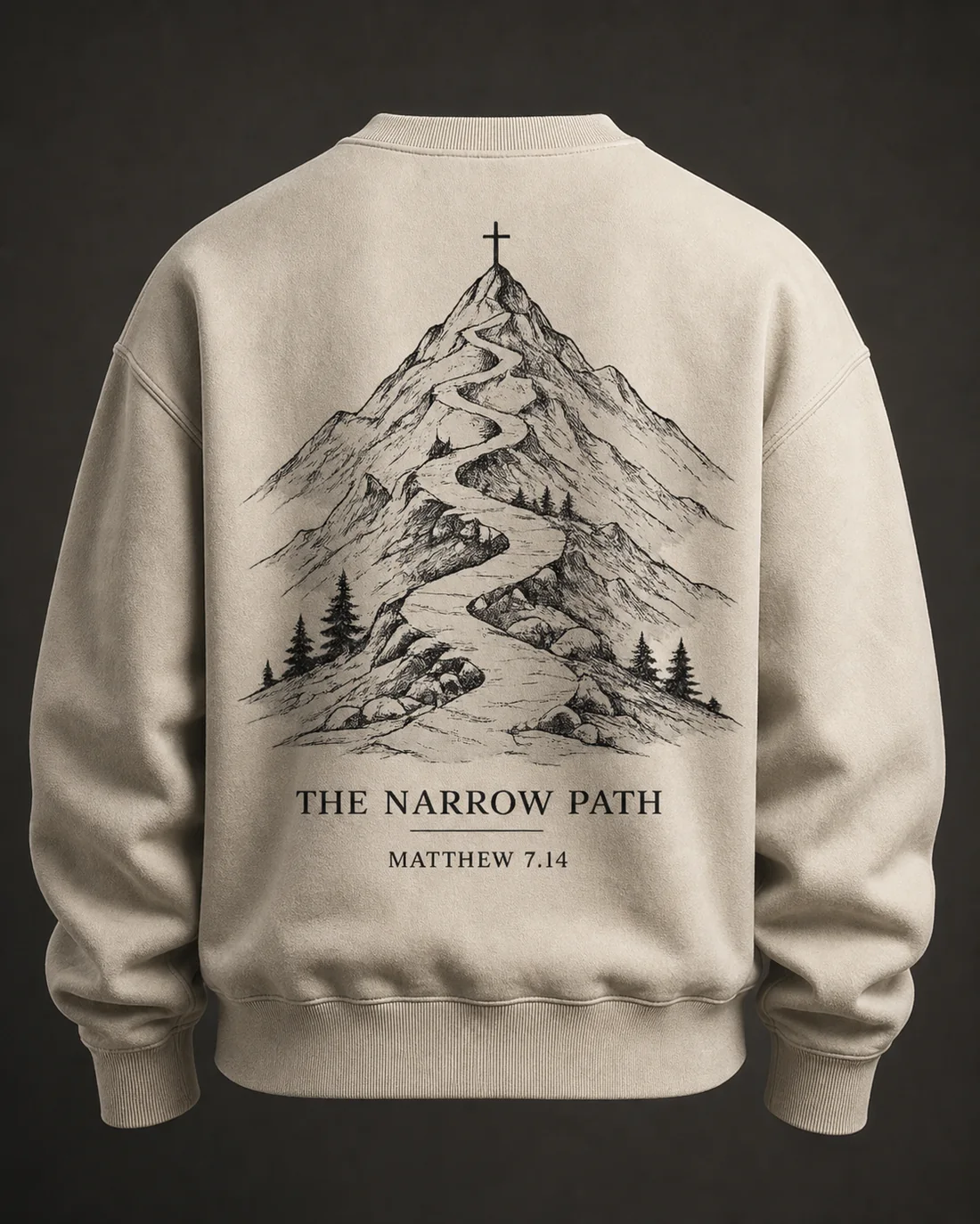
The First Drop
"Because narrow is the gate and difficult is the way which leads to life, and there are few who find it."
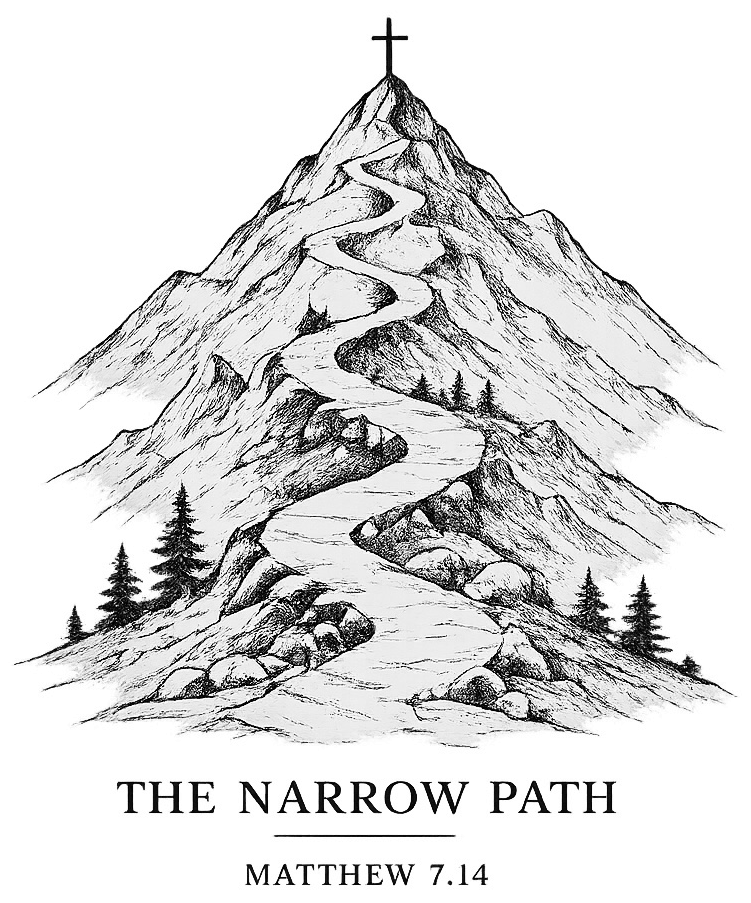
One trail. One summit. One cross. Every switchback drawn by hand in fine line etching — the climb rendered honestly, because the verse is honest about it.
This is the flag piece. It is not a slogan and it is not decoration. It's a statement of route: I picked the hard road on purpose.
Drop 01 — Available Now
The first release, ready to wear. The Narrow Path tee and the Thorn Crest cap — engraved in one color on heavyweight cotton. Limited run.
DROP 01 · TEE
Matthew 7:14 · Bone
Thorn crest on the chest, the full mountain on the back. Heavyweight garment-dyed cotton, one-color engraving.
$30
 DROP 01 · CAP
The Thorn Crest · Bone
Unstructured six-panel, garment-washed twill, brass slide buckle. Flat one-thread embroidery, front-center. One size, adjustable.
$30
10% of every order supports our youth group.
Volume I — The Pilgrim
One journey told in eight pieces — from the first step onto the path to the fire that proves it.
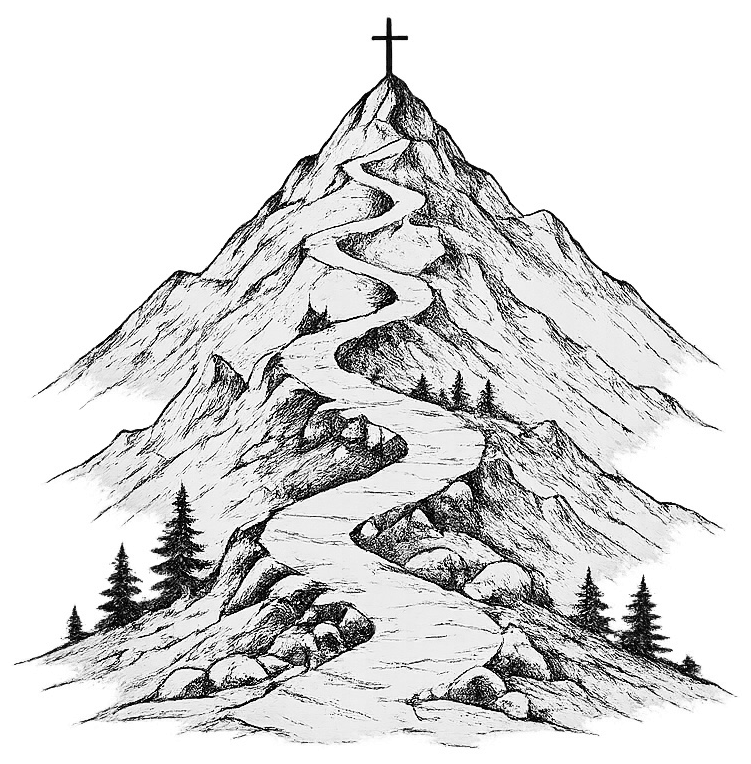
Matthew 7:14
"Narrow is the gate and difficult the way that leads to life."
The founding design. A single trail climbing the mountain to the cross — the path most won't take, and the only one that leads home. This is the flag piece. It says: I picked the hard road on purpose.
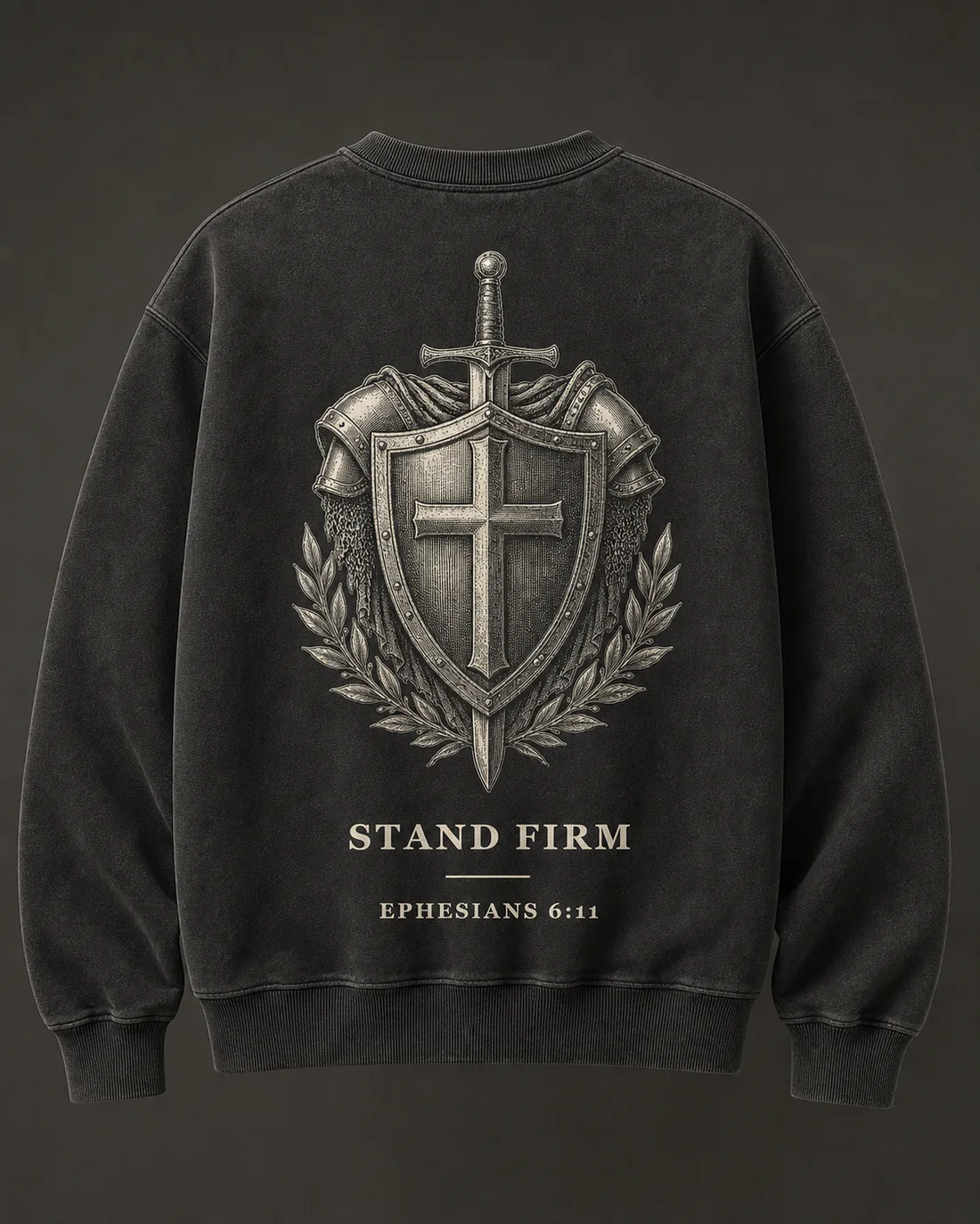
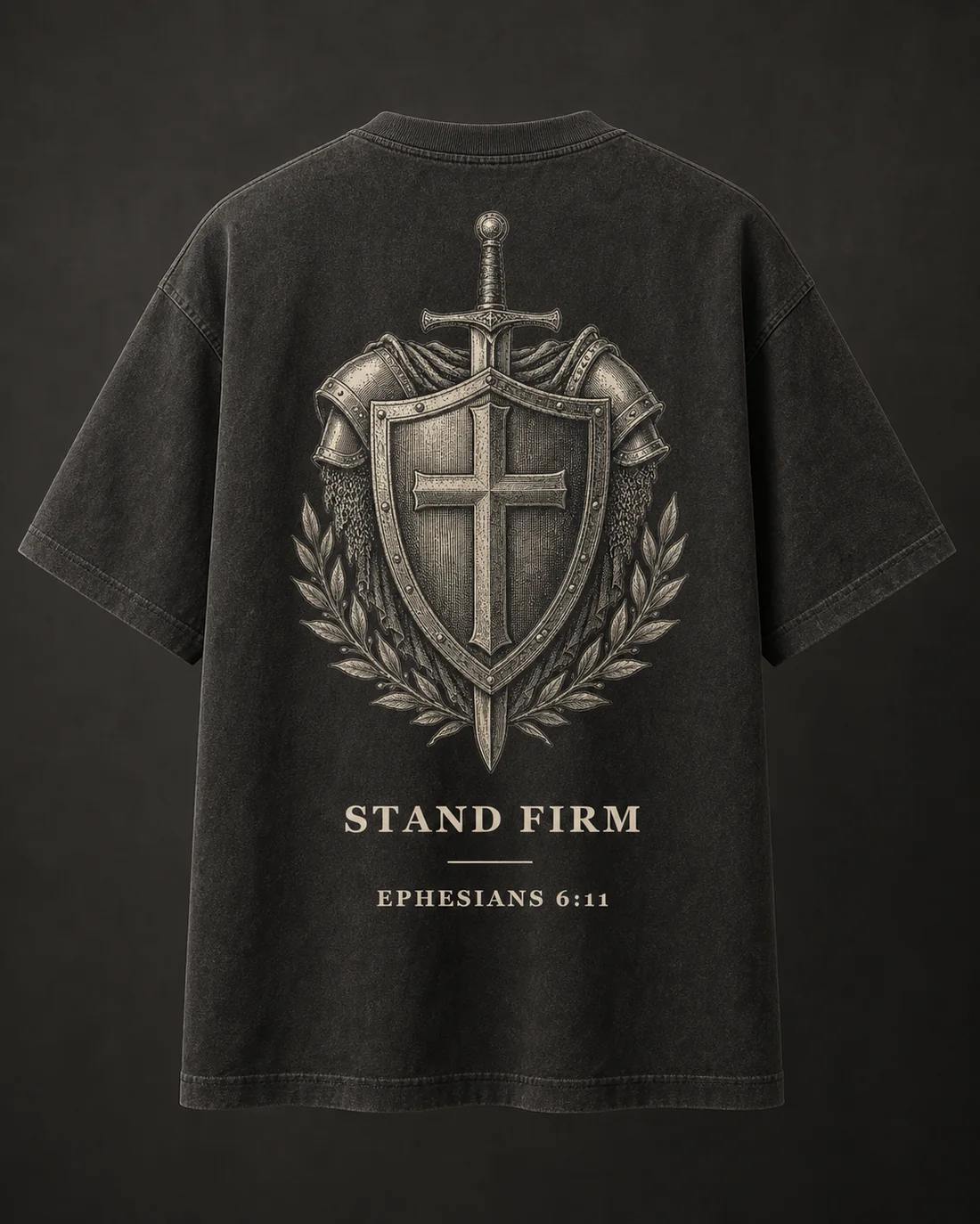
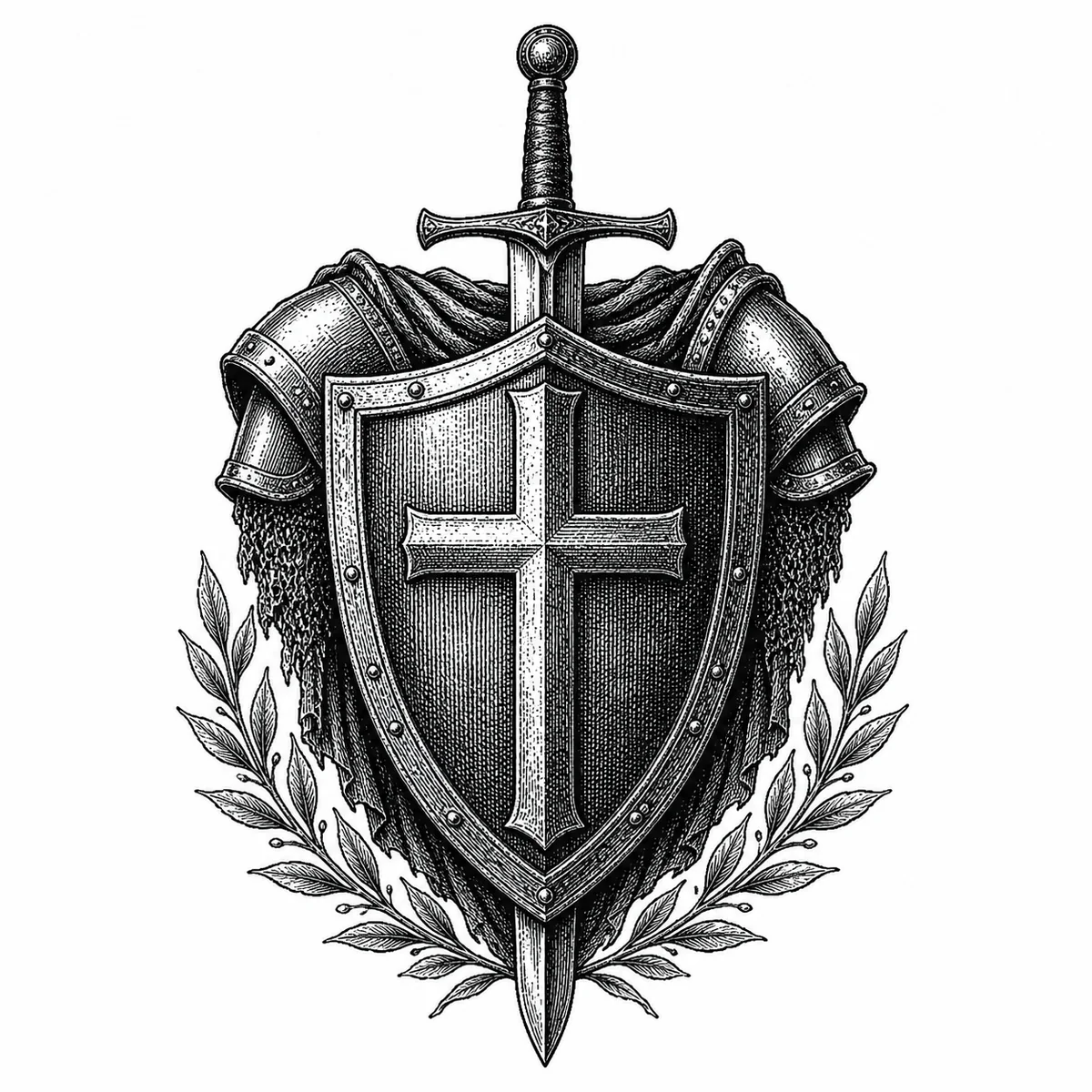
Ephesians 6:11
"Put on the full armor of God, that you may stand."
The whole armor rendered as an engraved crest — helmet, shield, sword point-down. For the one who already knows life is a fight, and knows Who armors him for it. Spiritual warfare, made wearable.
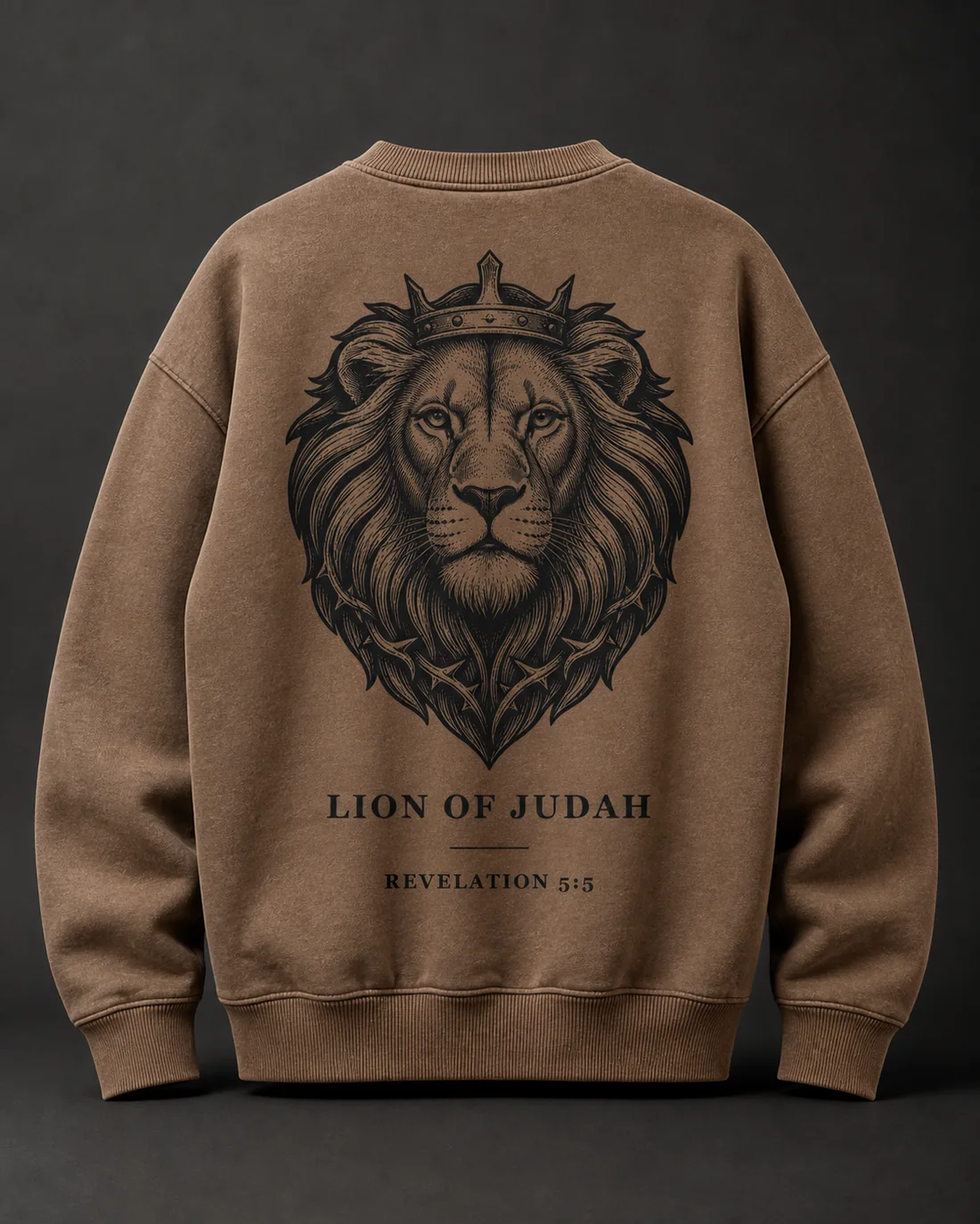
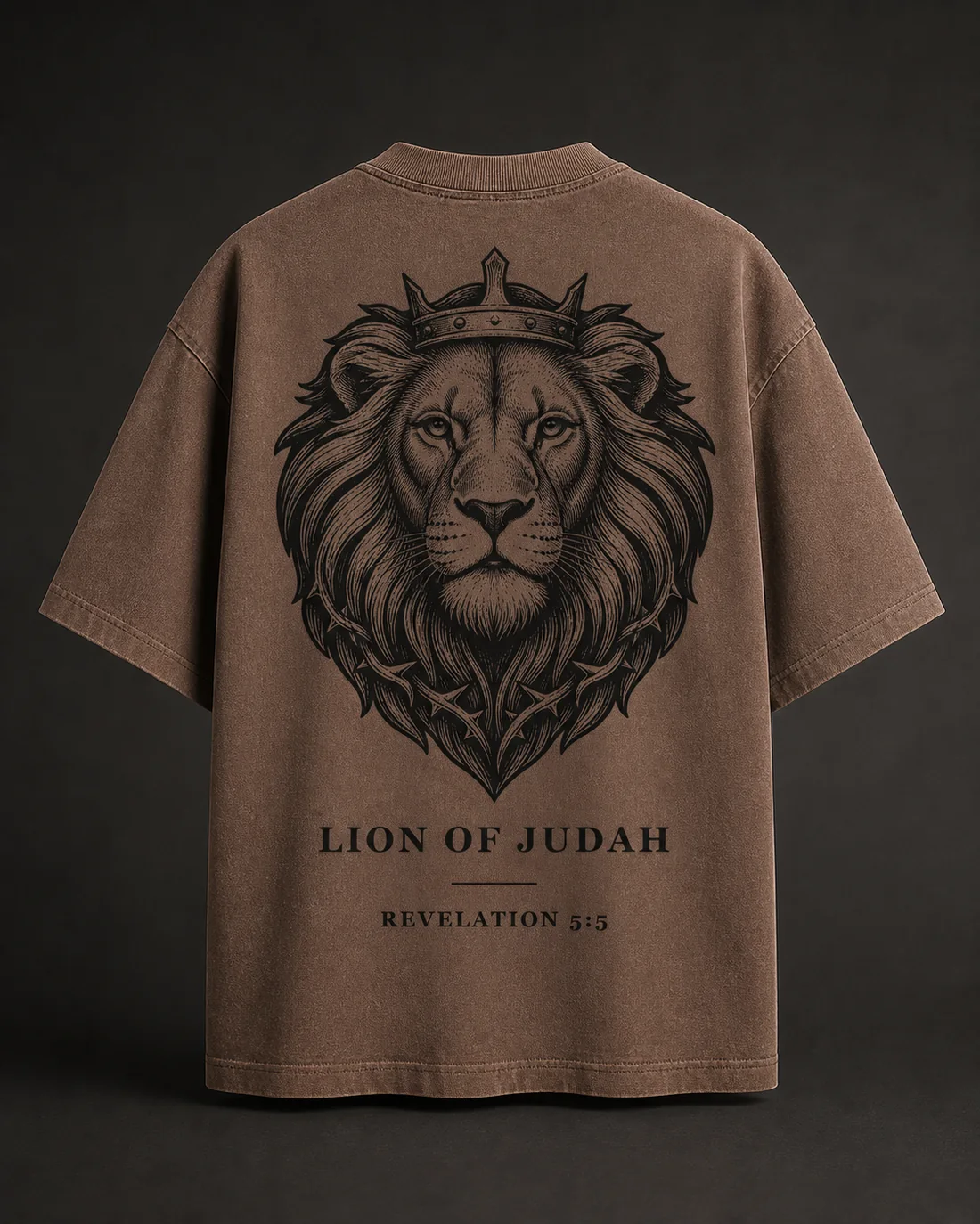

Revelation 5:5
"The Lion of the tribe of Judah has triumphed."
A crowned lion whose mane reads like rays of fire. Christ the conqueror — and the courage He hands down. The boldest piece in the line, and the one they'll reach for first. Fear no man.
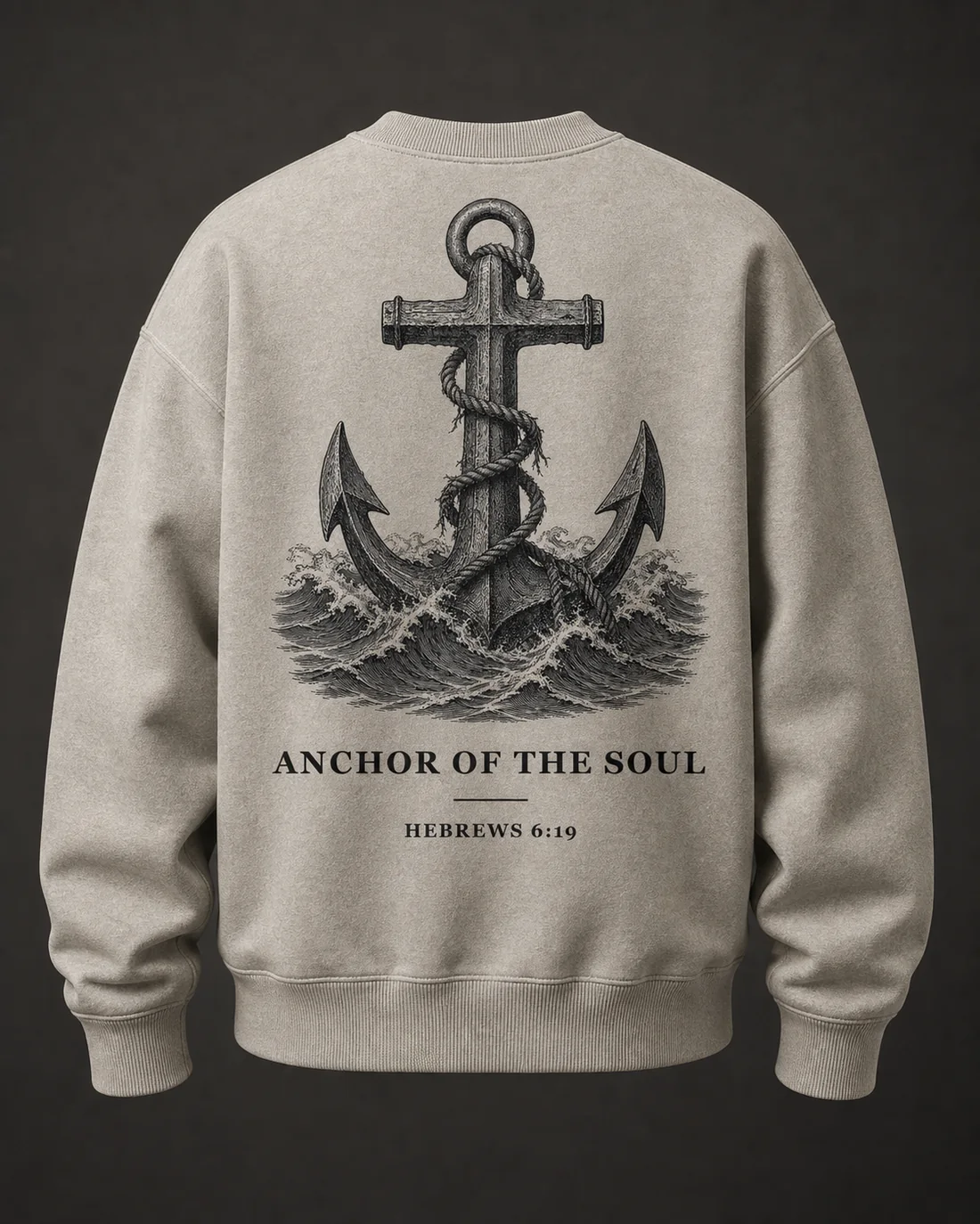
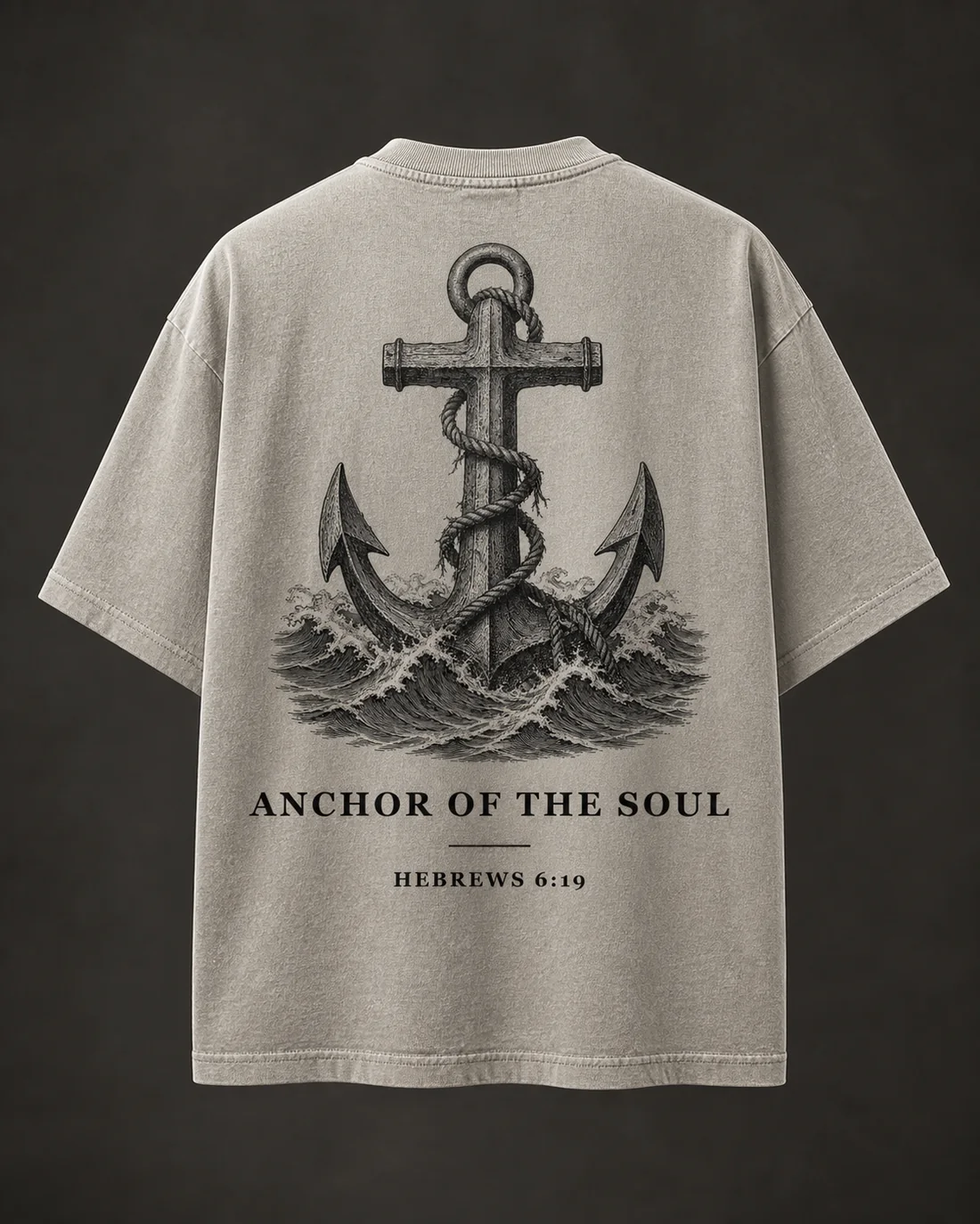
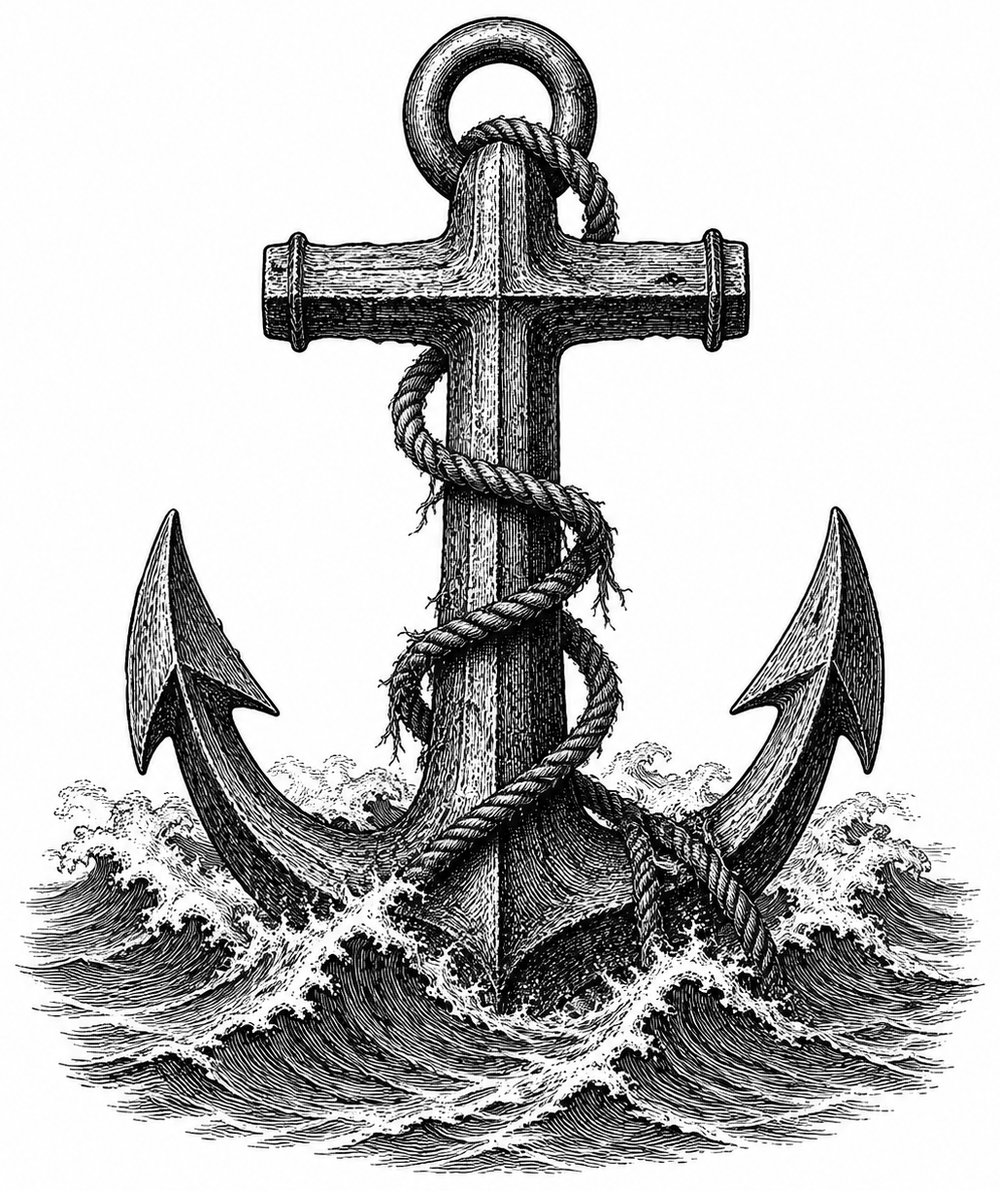
Hebrews 6:19
"We have this hope as an anchor for the soul, firm and secure."
An anchor whose stock forms the cross, bound in rope, half-buried in the waves. Hope that holds when everything else is moving. The quiet one — for the kid getting through a hard season without saying so.
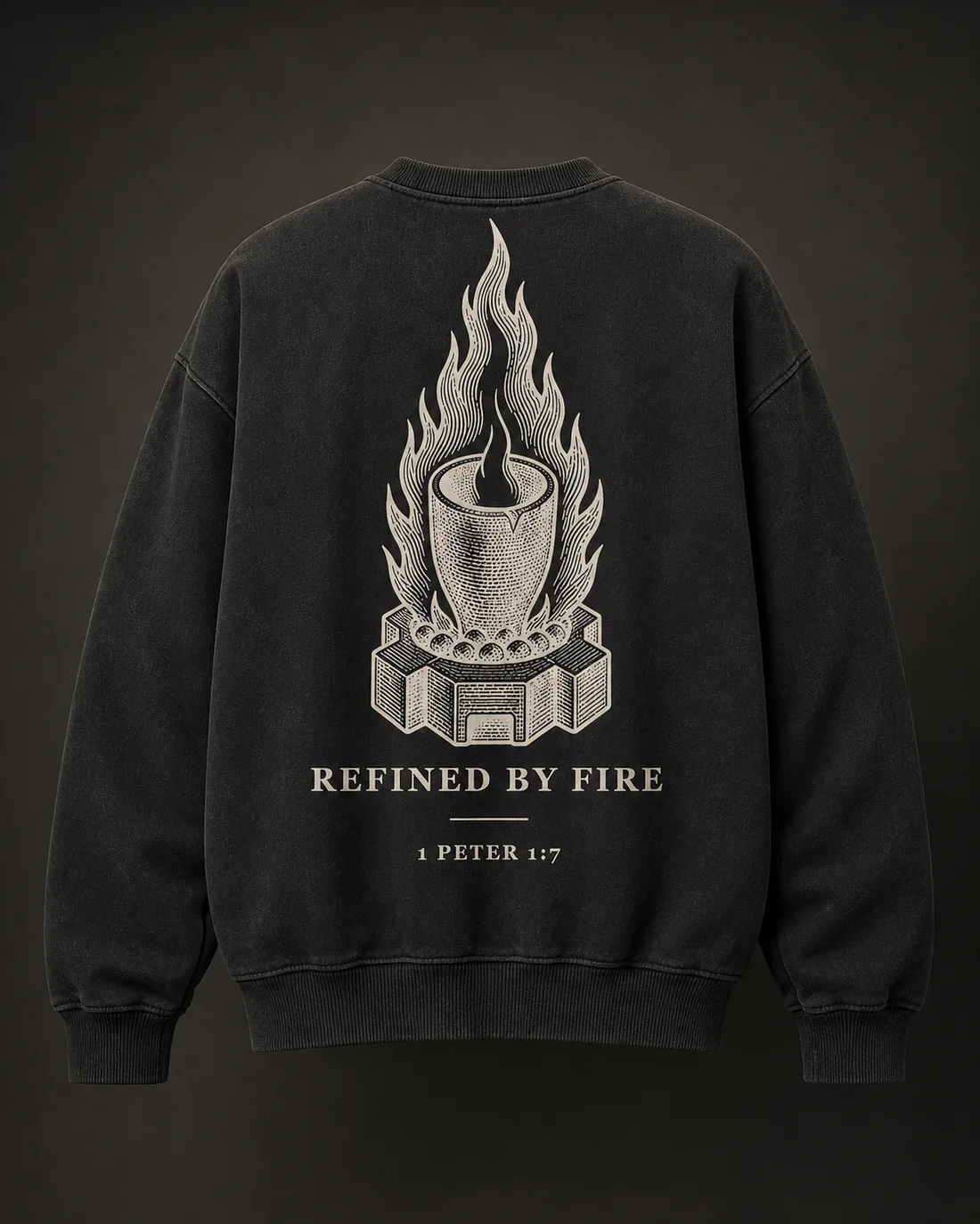
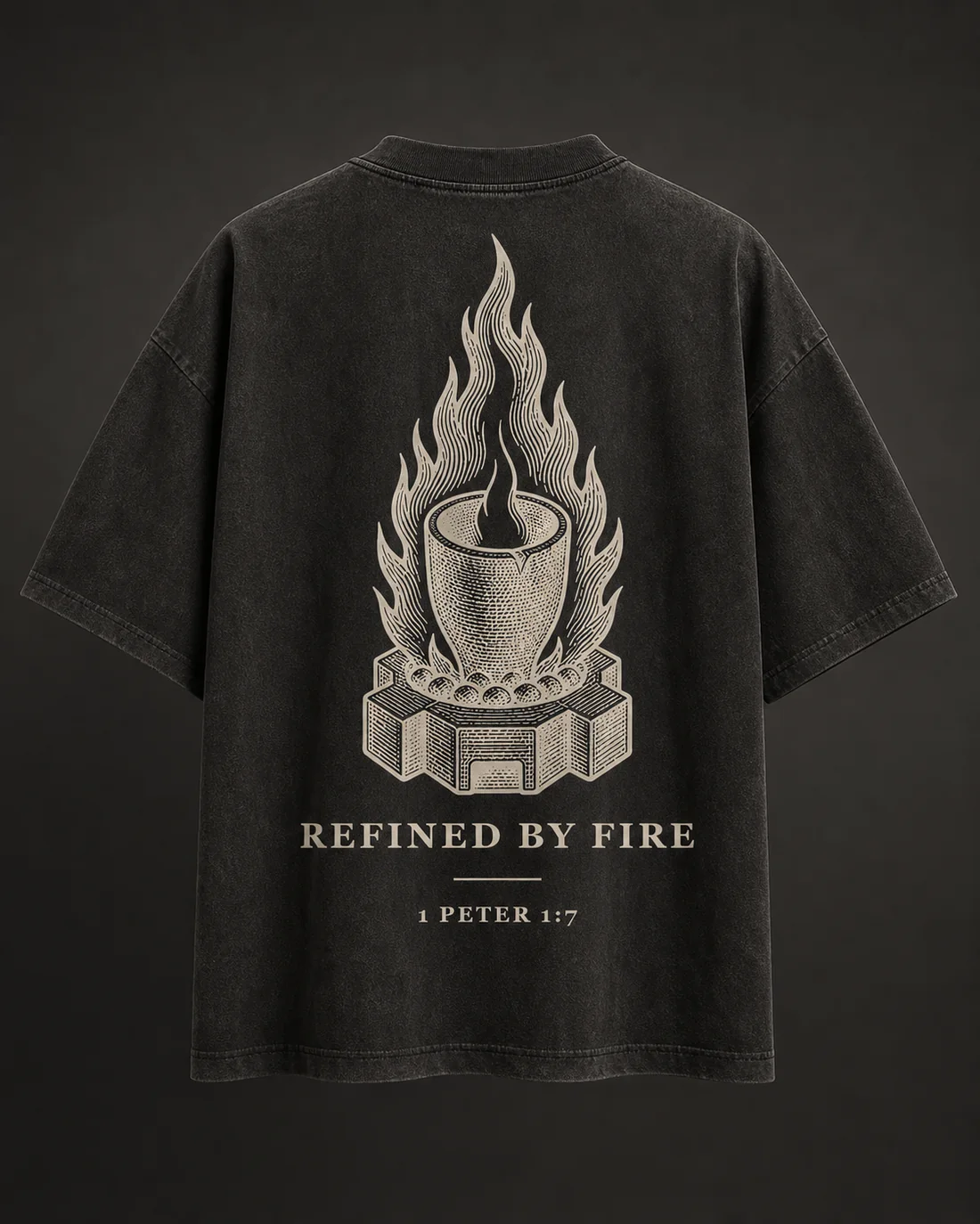
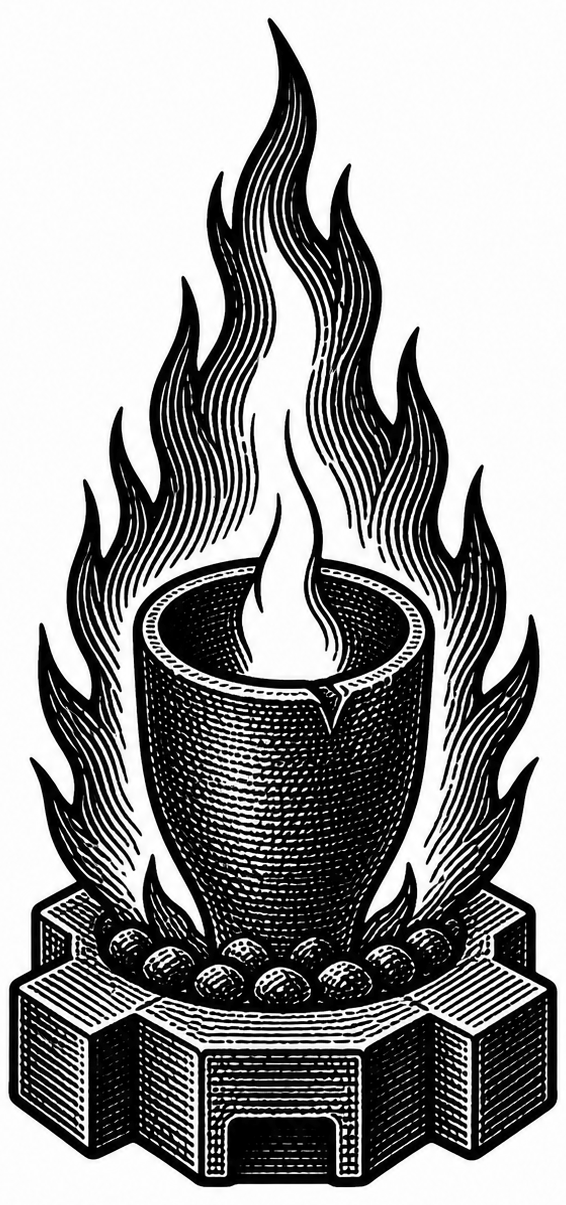
1 Peter 1:7
"Your faith — of greater worth than gold — refined by fire."
A single flame over the crucible, etched like a forge's tongue. Trials aren't punishment; they're the process that proves the gold. Tested. Proven. The piece that bridges faith and the grind.
Psalm 1:3
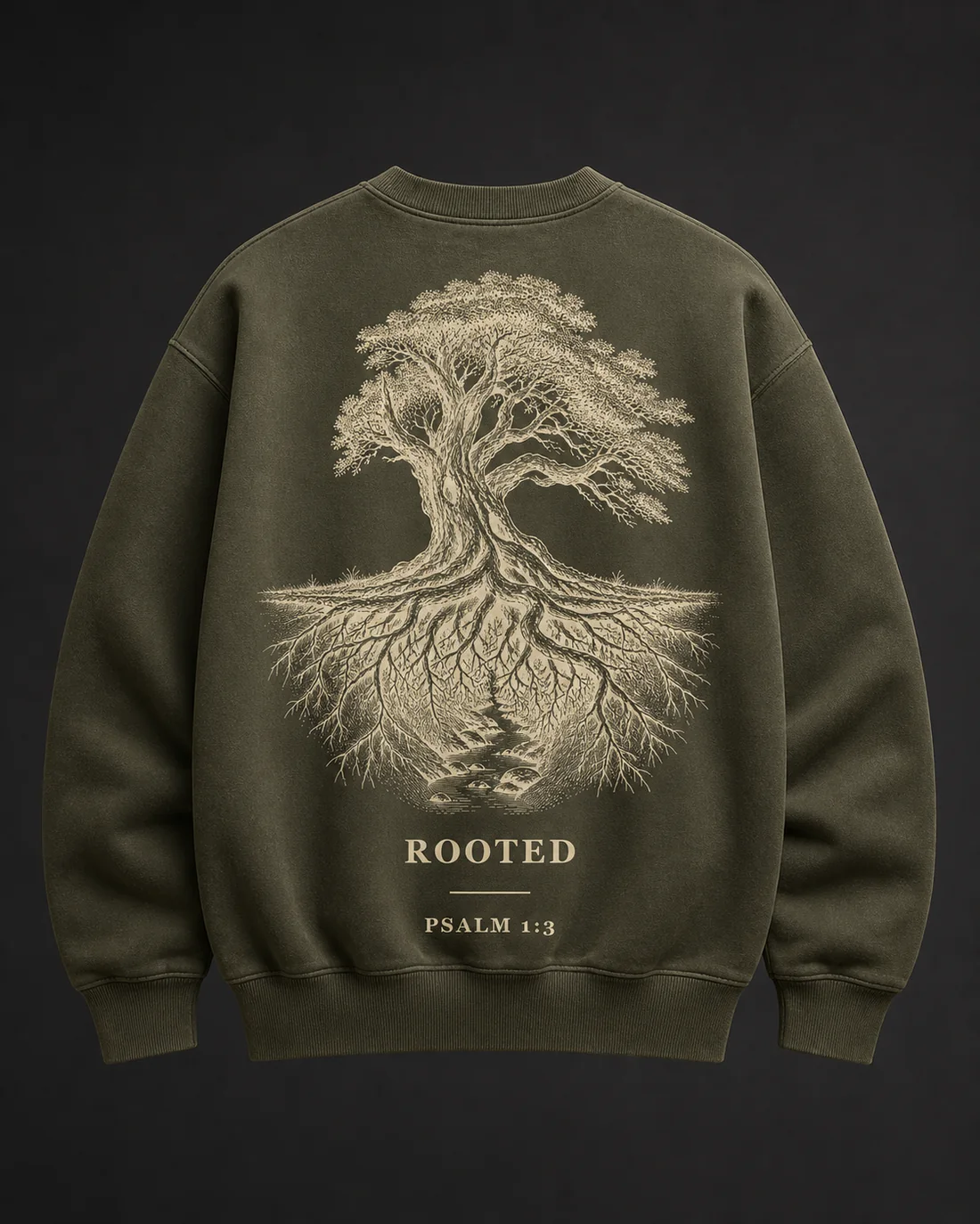
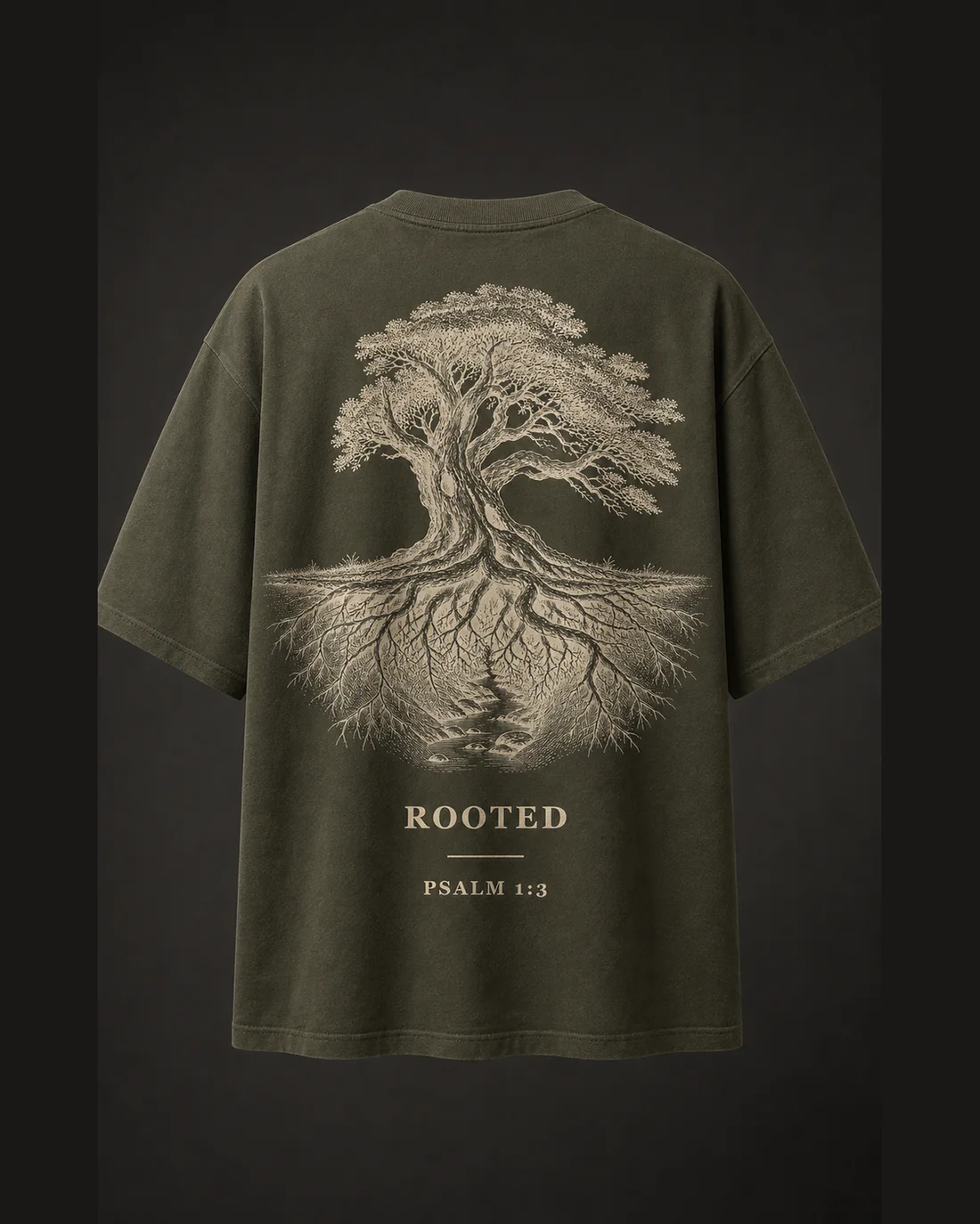
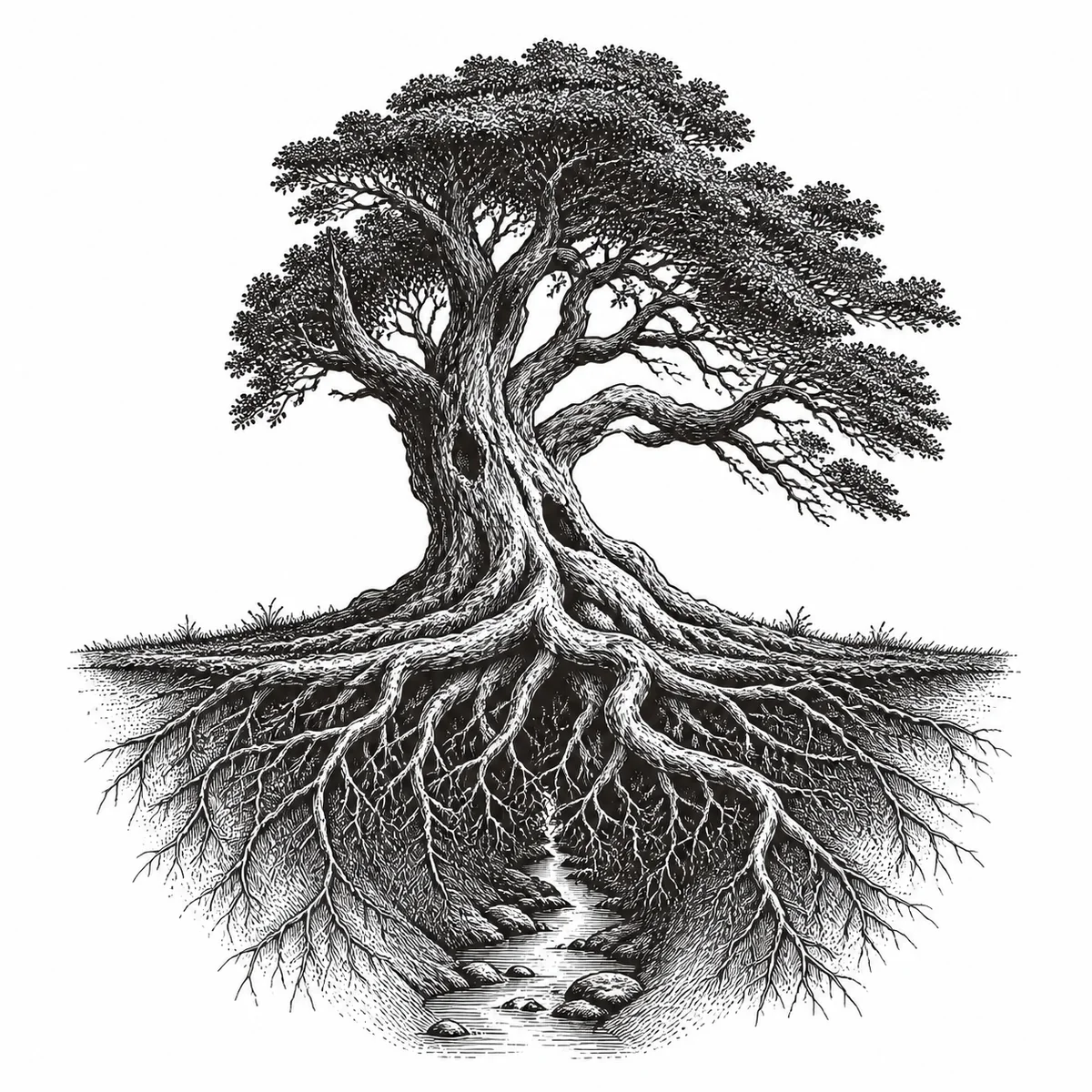
"Like a tree planted by streams of water, yielding its fruit in season."
A full canopy above, deep exposed roots below, drinking from a hidden stream. What's unseen underground is what keeps you standing in the storm. Planted, not shaken.
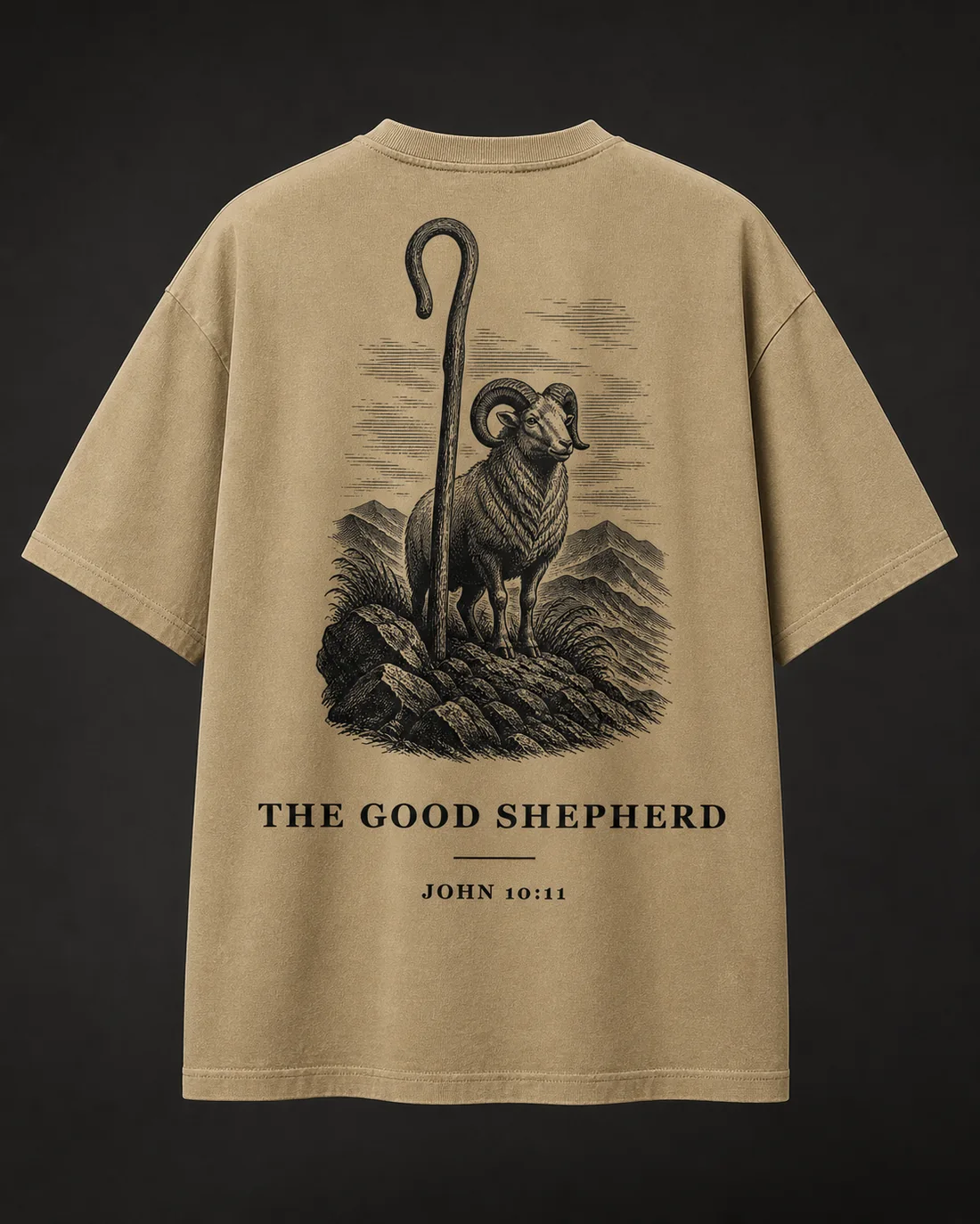
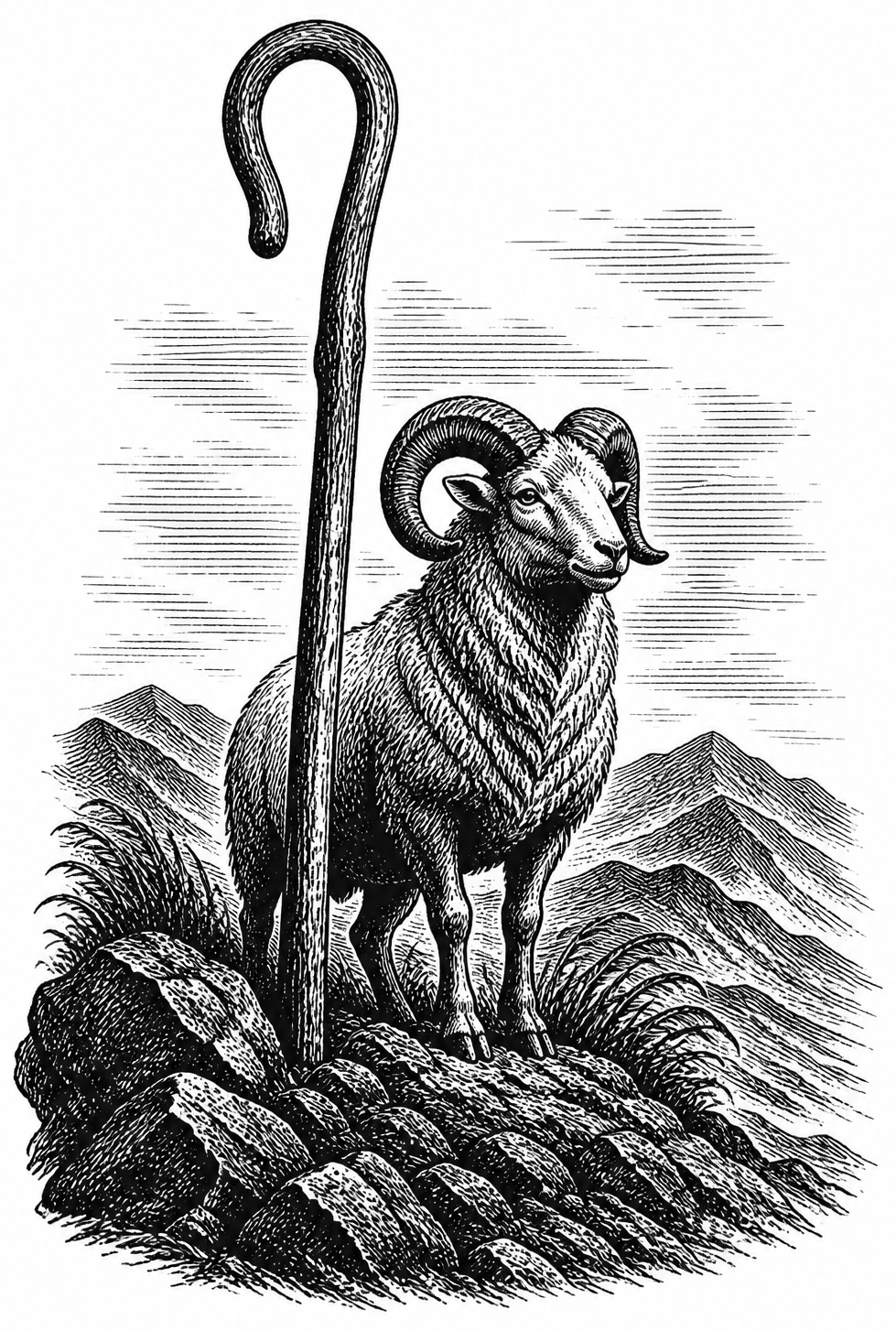
John 10:11
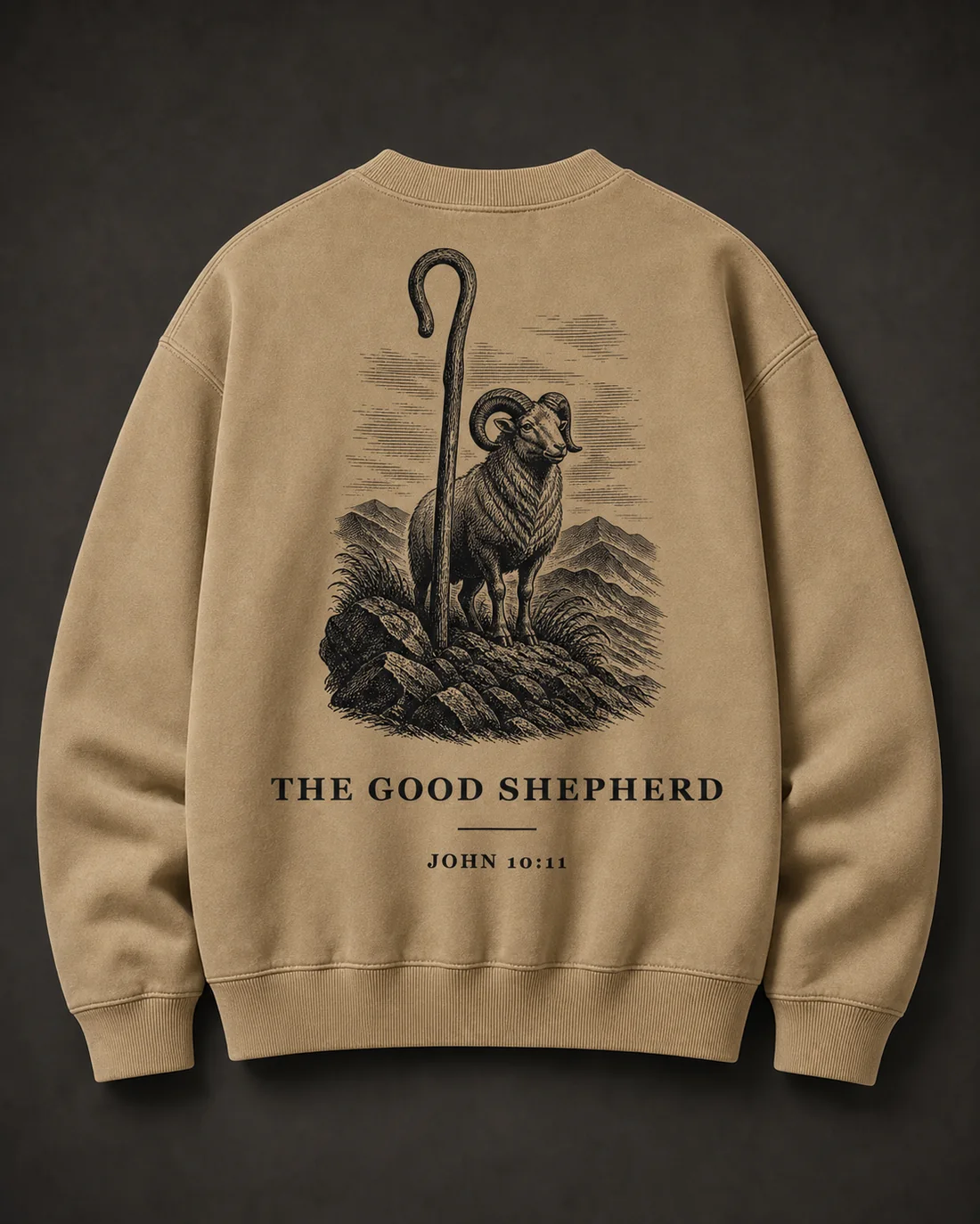
"I am the good shepherd. The good shepherd lays down his life for the sheep."
A crook planted in bare rock, one of the flock standing steady beside it on the high ground. He does not call from the valley floor — He climbs up after you. Grace for whoever wandered furthest.
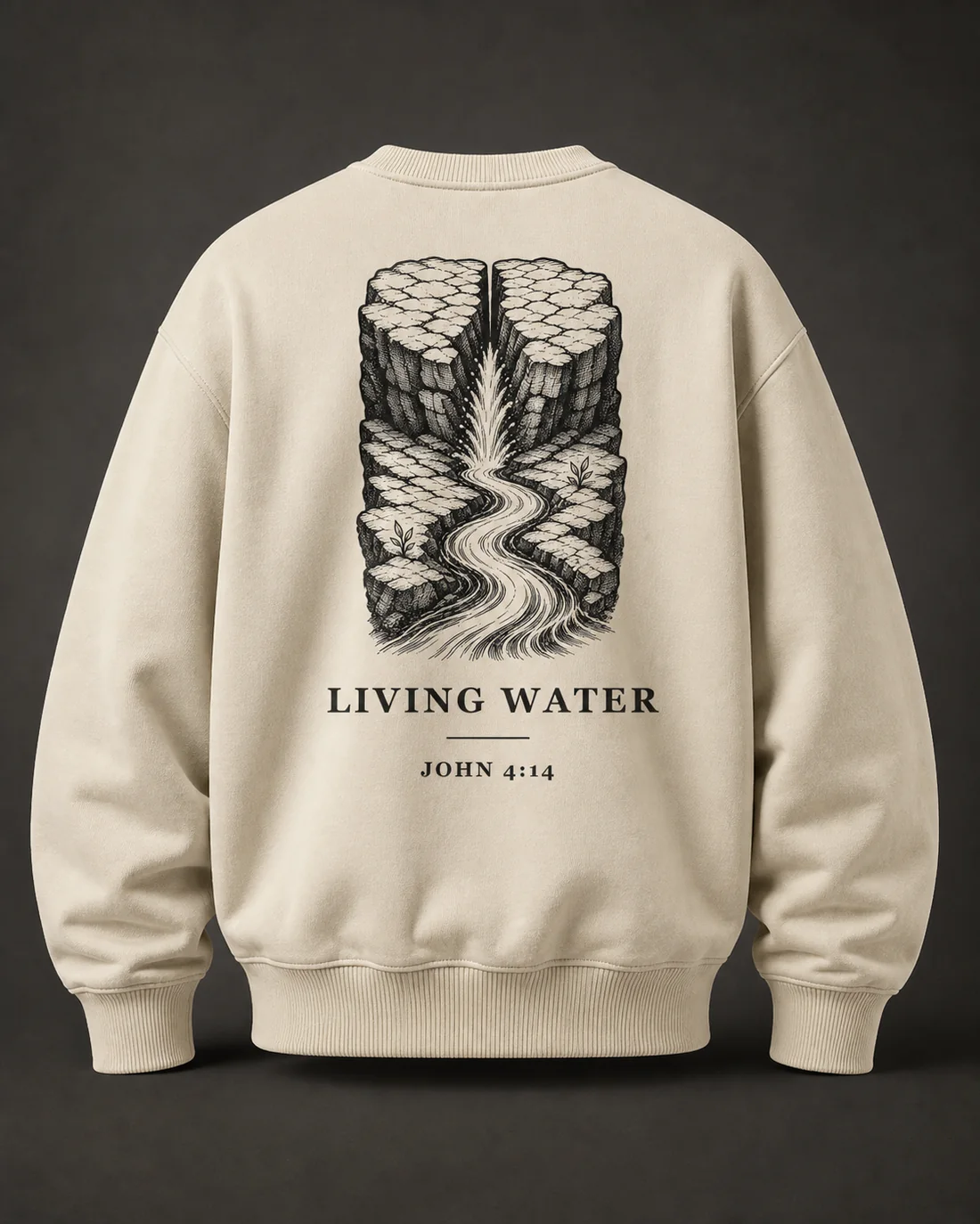
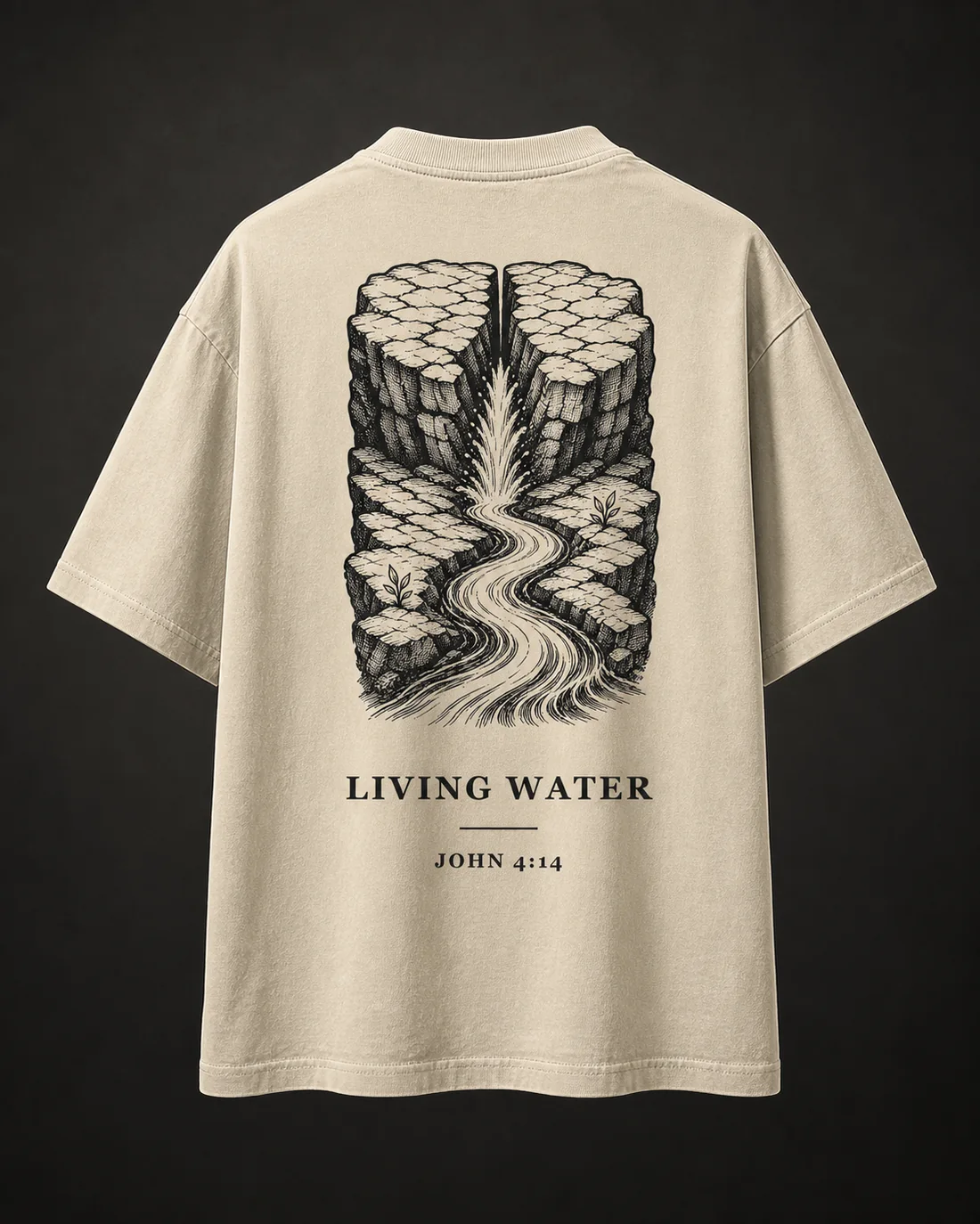
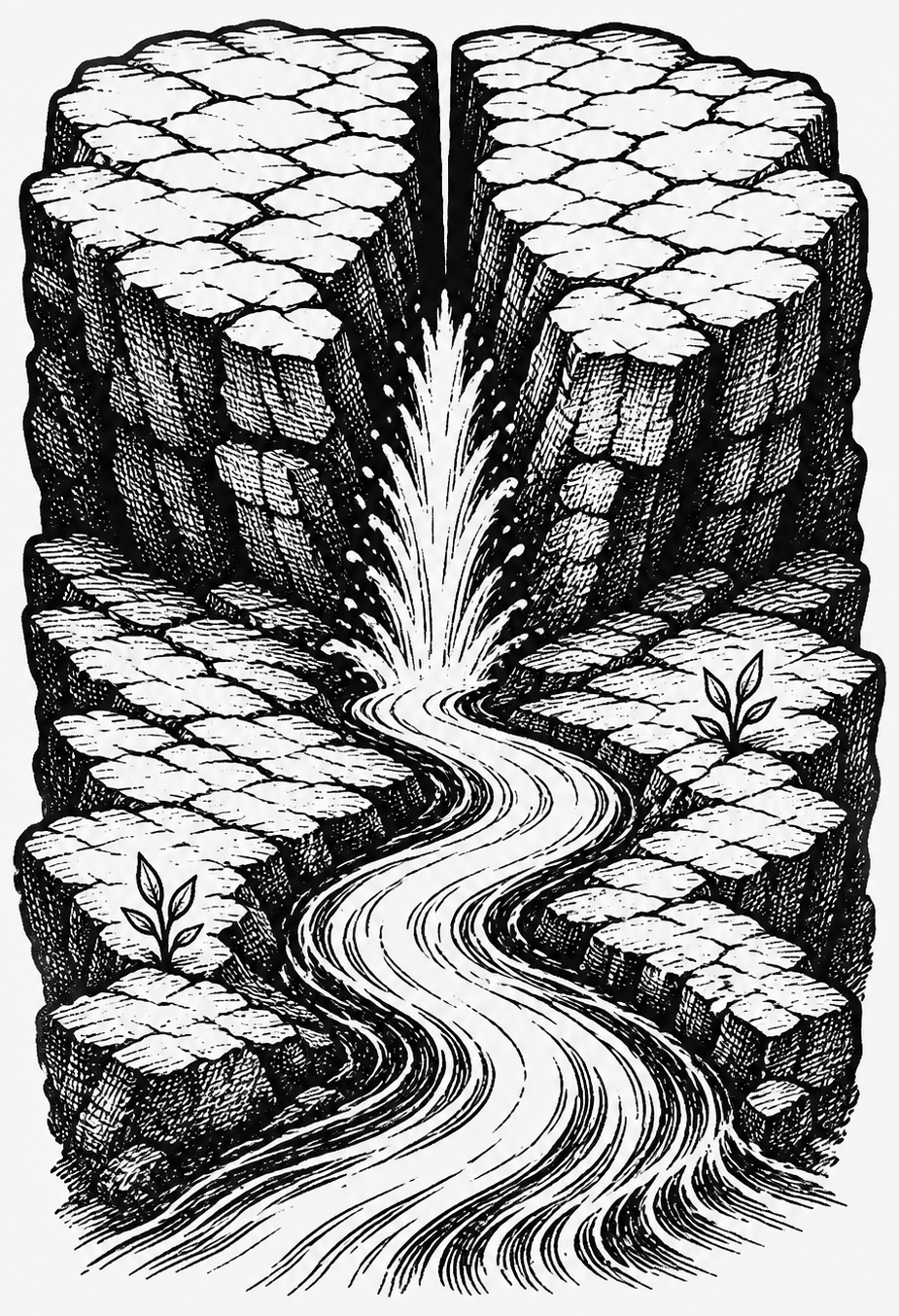
John 4:14
"Whoever drinks the water I give will never thirst again."
A spring breaking through cracked desert rock into a running stream. The source that never runs dry, in the driest place. The invitation piece — and the one you hand to someone still searching.
The Reading
Eight verses. What they meant to the people who first heard them, and what they ask of you.
A verse in a book waits to be opened. A verse on a back walks into the room without you.
You will not always want to start the conversation. Most days you won't. That is exactly why it is printed where you cannot see it and everyone behind you can. The garment speaks after you have already walked past. You don't have to be eloquent. You have to be dressed, and you have to be walking.
"What does that mean?" is the only question we are trying to earn. A slogan gets read and dismissed in a second and a half. An engraving gets studied. The eye finds the art, then drops to the verse, then lifts to you — and by then they have already asked, and you are already in it.
You have heard these verses your whole life. That is the problem — a verse you can finish from memory is a verse you have stopped hearing. Below is what each one actually says: the room it was written into, the way it gets misread, and what it costs to mean it. Read the one on your back. Then you are not quoting. You are answering.
The Order of the Eight
Open any verse below, or read all eight in full.
“Because narrow is the gate and difficult is the way which leads to life, and there are few who find it.”
Jesus says this as the closing verdict of the Sermon on the Mount — right after the hardest ethical teaching ever delivered. Love your enemies. Deal with the lust, not just the act. Stop storing up treasure. Then, having said all of it, He draws two roads and asks which one you are on. This is not a standalone motivational line. It is the sentence at the end of the argument.
It is not a headcount. The point was never to feel superior about being among “the few,” and it was never that God made the door small out of stinginess. Read that way it becomes a club, which is the precise opposite of what the sermon just spent three chapters dismantling.
The word translated difficult is tethlimmenē, from a verb meaning to press or compress — the word for a road hemmed in by rock on both sides. The way is not narrow because few are allowed. It is narrow because you cannot get through it carrying everything. The wide gate has no cost of entry; you walk in with all of it. The narrow one takes you one at a time and makes you set things down. So the honest question is not whether you are among the few. It is what you are still carrying that will not fit.
“Put on the whole armor of God, that you may be able to stand against the schemes of the devil.”
Paul writes this from custody, plausibly within sight of a Roman guard, to a church in Ephesus — a city thick with magic, curse tablets, and the cult of Artemis. These were people for whom unseen powers were not a metaphor. He hands them a soldier's kit as the answer.
It is not a call to go on the offensive. The passage gets read as war-paint — go attack something — but every verb Paul attaches to the armor is the same one: stand. Stand against. Withstand. Having done all, stand. It is the equipment of a man holding a line, not storming a hill.
Notice what is missing from the list. Belt, breastplate, boots, shield, helmet, sword — Paul names no piece for the back. The kit assumes a direction. It assumes you are facing it. You are not being asked to win the war. You are being asked to still be standing in the same place when it is over — and that is a far harder assignment than heroics.
“Do not weep. Behold, the Lion of the tribe of Judah, the Root of David, has prevailed.”
John is weeping because no one in heaven or earth is found worthy to open the scroll. An elder tells him to stop crying and look — the Lion has conquered. John turns to see the Lion.
It stops being true the second you read the lion as swagger. This verse gets pulled onto a lot of merchandise as pure dominance imagery, and the people quoting it almost never quote the next verse.
Because in the next verse John turns, and what he sees standing there is a Lamb, looking as though it had been slain. The announcement is Lion. The appearance is Lamb. That reversal is the hinge the entire book of Revelation turns on: the Lion conquered by being killed. Power is not affirmed here, it is redefined. If you want the lion, you get it the way He got it — by laying something down. Courage that has never cost you anything is just volume.
“This hope we have as an anchor of the soul, both sure and steadfast, which enters the Presence behind the veil.”
The letter is written to Jewish believers under real pressure to go back — back to what was familiar, legal, and safe. The entire book is one sustained argument against drifting. This is its picture of what holds.
Hope here is not optimism. It is not a positive feeling about how things will probably turn out, and it is not confidence in an outcome you have privately decided on. That kind of hope is anchored to your circumstances, which is the same as being anchored to nothing.
Look at where the anchor goes. Every anchor you have ever seen drops down, into the seabed beneath you. This one goes up — “behind the veil,” into the inner sanctuary, the room no one but the high priest could enter. Your hope is not fastened to anything in your situation. It is fastened inside a room you have never seen, to a Person already standing in it. Which means steadiness is not a personality trait you were born with or without. It is a question of where the rope is tied. You can feel completely unsteady and still be held.
“That the genuineness of your faith, being much more precious than gold that perishes, though it is tested by fire, may be found to praise and honor and glory.”
Peter is writing to believers scattered across five provinces — displaced people, some of them refugees, most of them a social underclass. He is not addressing anyone having a difficult week. He is addressing people whose lives had already cost them something.
It is not God grading you, and it is not God punishing you. “God is testing me” usually gets said with the sense of an exam that could be failed, or a penalty being served. Neither is in the sentence.
The word is dokimion — the assayer's term. When you assay gold you apply heat, and the heat does not improve the metal. It cannot. All it does is separate what was gold from what was never gold, and reveal what was already there. The fire does not make the gold; the fire proves the gold was gold. And note what Peter assumes in the comparison: your faith is more precious than gold — and gold still goes in the fire. Nothing is being added to you in the hard season. Something is being taken away from you. That is a different kind of pain, and a far better one.
“He shall be like a tree planted by the rivers of water, that brings forth its fruit in its season, whose leaf also shall not wither.”
Psalm 1 sits first in the Psalter on purpose. It is the doorway — the frame the editors built so that everything that follows, all the lament and rage and praise across a hundred and forty-nine more psalms, is read through it.
It is not a promise that you will always be producing. The line most people carry out of this verse is “planted by the water,” and the words they skip are the three that follow the fruit: in its season. Nothing here promises a permanent harvest.
The Hebrew is shatul — not merely growing, but transplanted. Lifted from somewhere and put here, deliberately, by someone else. The verb is passive; the tree did not choose the riverbank and did not put itself there. And what the psalm actually guarantees is narrower and better than constant fruit: fruit in season, and leaves that do not wither in between. Most of a tree's life is not harvest. It is standing there, green, drawing water. So if you are not producing anything right now, you are not failing. Check the roots, not the branches. Fruit is seasonal. Rootedness is not.
“I am the good shepherd. The good shepherd lays down His life for the sheep.”
This lands immediately after Jesus heals a man born blind and the religious authorities throw him out of the synagogue for it. Chapter 10 is Jesus' response to that — an indictment of the men who were supposed to be shepherding and instead scattered the flock. There is an edge on this line. It is aimed at somebody.
It is not sentimental. The greeting-card version — a gentle man with a lamb across his shoulders — drains the sentence of the confrontation it was built for.
The word for good is kalos, not agathos. It does not primarily mean morally upright; it means genuine, true, the real one as opposed to the counterfeit. The contrast Jesus draws in the verses around it is not good against evil — it is real against hired. And He gives you the one test that separates them: the hireling runs when the wolf comes, because the sheep are not his. The real one does not run. Plenty of voices will claim you. The test is never what they say while it is easy. You will know the real one by what He was willing to lose for you.
“Whoever drinks of the water that I shall give him will never thirst. But it will become in him a fountain of water springing up into everlasting life.”
The sixth hour — noon. Nobody drew water at noon; you went at dawn with the other women. She goes in the heat, alone, because of what the other women say when she is there. And a Jewish rabbi speaking to a Samaritan woman by herself breaks three social rules in a single sentence.
It is not a promise that you will stop wanting things. “Never thirst again” gets heard as the deletion of longing — that if faith were working properly you would feel no ache. That is not what the sentence says, and holding people to it has wrecked a lot of honest faith.
What changes is not the thirst. It is the location of the source. He says the water becomes a spring in him — you stop walking out to the well, because the well has been moved inside you. And watch what happens next in the text: she leaves her waterpot at the well and goes back to get the town. She received it and became a source in the space of one conversation. The sign that it took is not that you stopped wanting. It is that you stopped hauling — and that somebody else started drinking.
Read in order, the eight are a life. Worn out of order, they are still true. Most people find the piece they need before they understand why they needed it.
The Drop System
Crossbound releases in numbered drops — one verse per piece, grouped into Volumes. When a drop sells through, it's retired. Owning Drop 01 means you were there first.
The journey of faith. Eight drops from the first step onto the narrow path to the fire that proves it.
Discipline and spiritual battle. Where the training, the grind, and the fight for your own soul become the same work.
Calling and mission. What you do once you know who you are and Whose you are.
Real people wearing Drop 01 in real rooms. "What's that mean?" is the whole engine.
The verse before the product. People buy the why, then the shirt.
Limited quantity. Sell through by word of mouth. Every wearer is the ad.
The next verse is the next chapter. Waitlist opens. Testimony does the selling.
The Cloth
Every piece leads in Bone to stay on-brand, then expands into one or two seasonal colors. The CB thorn mark and the neck print never change — that consistency is the equity.
Heavyweight ring-spun cotton, oversized boxy fit.
Garment-dyed for the vintage hand-feel and fade.
Single-color screen print. True black, no gradients.
CB thorn mark at chest. "Walk With Purpose" at the neck.
Facing Forward
The print on your back is for whoever is behind you. This one is for whoever is across the table. Six marks, embroidered — one in every colorway in the system.
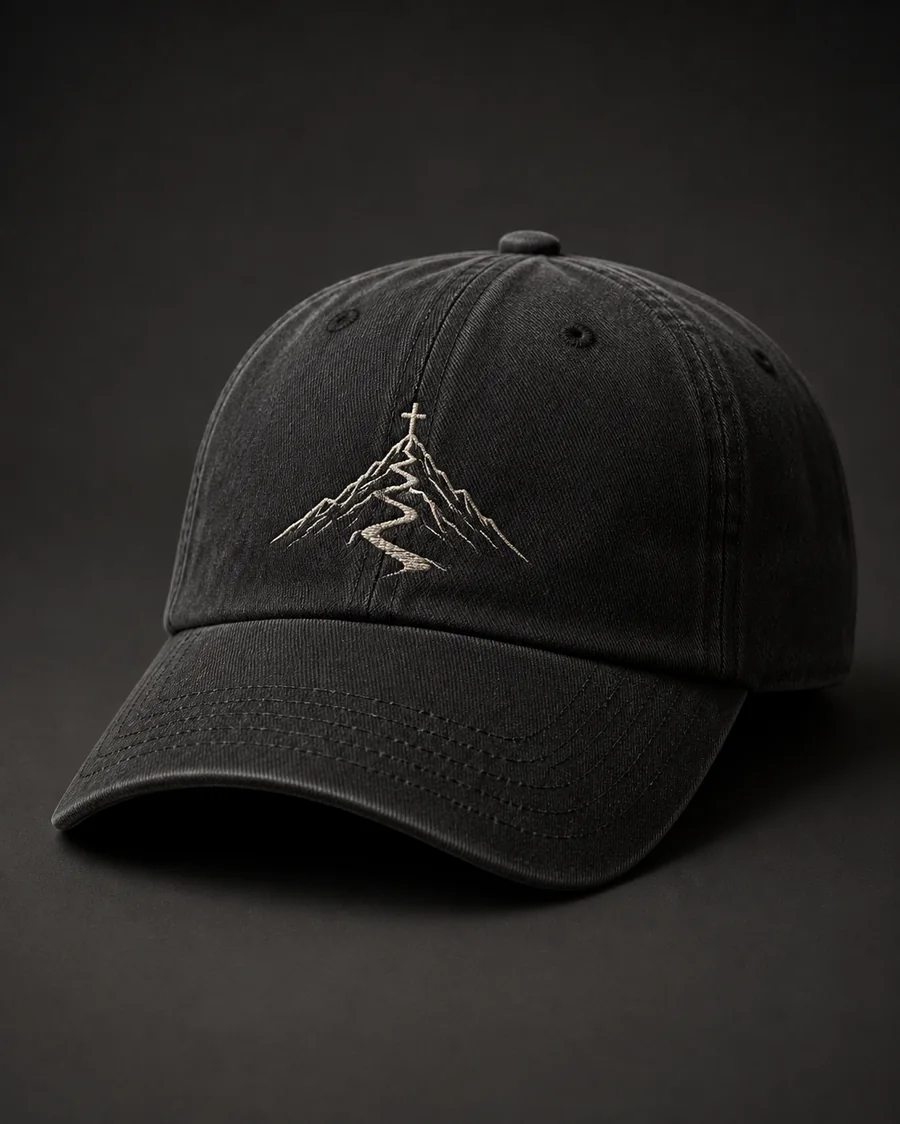
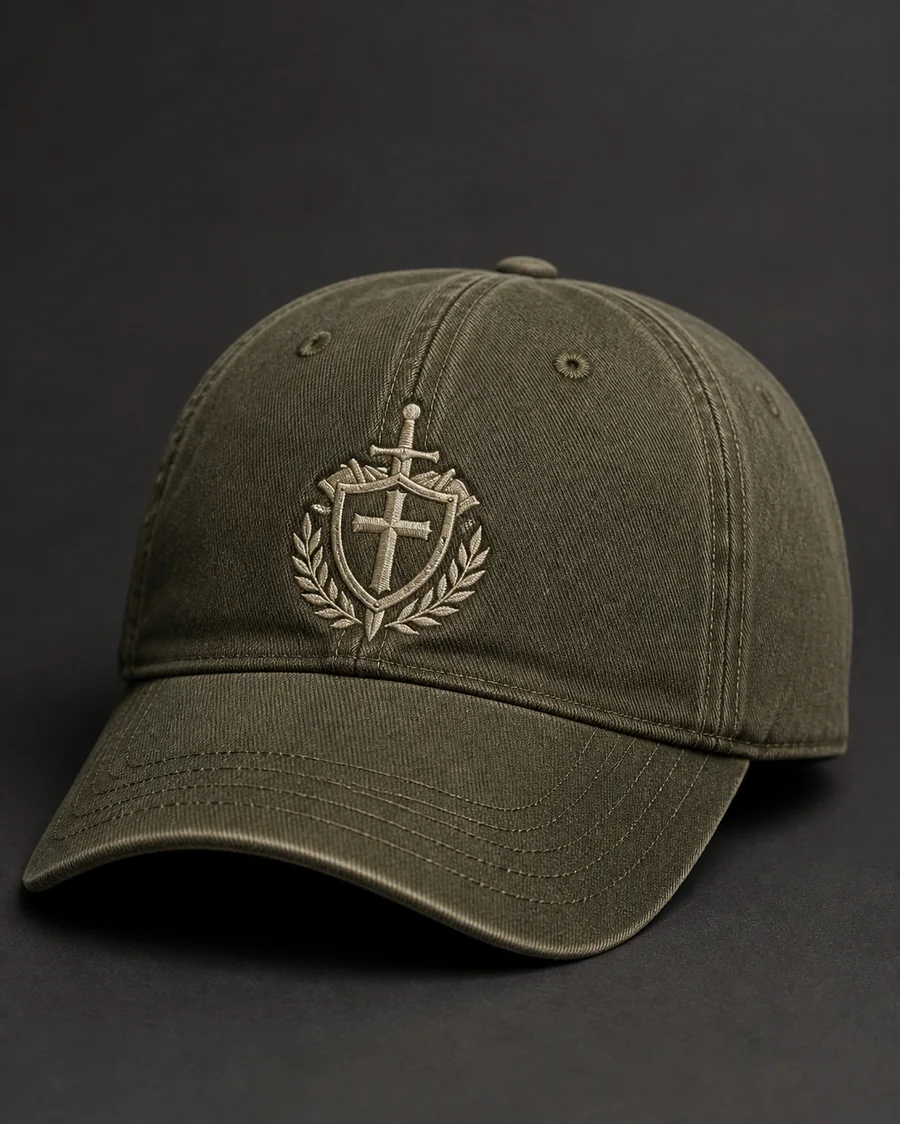

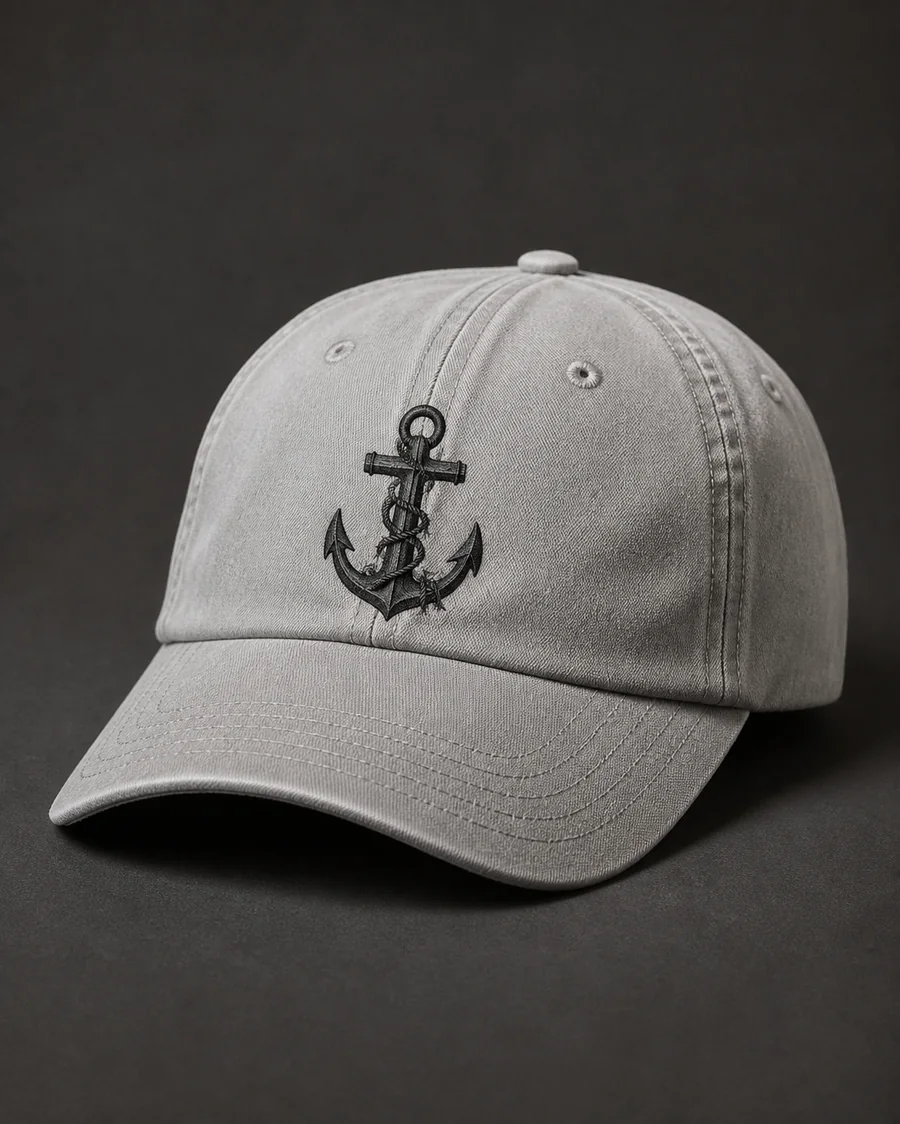
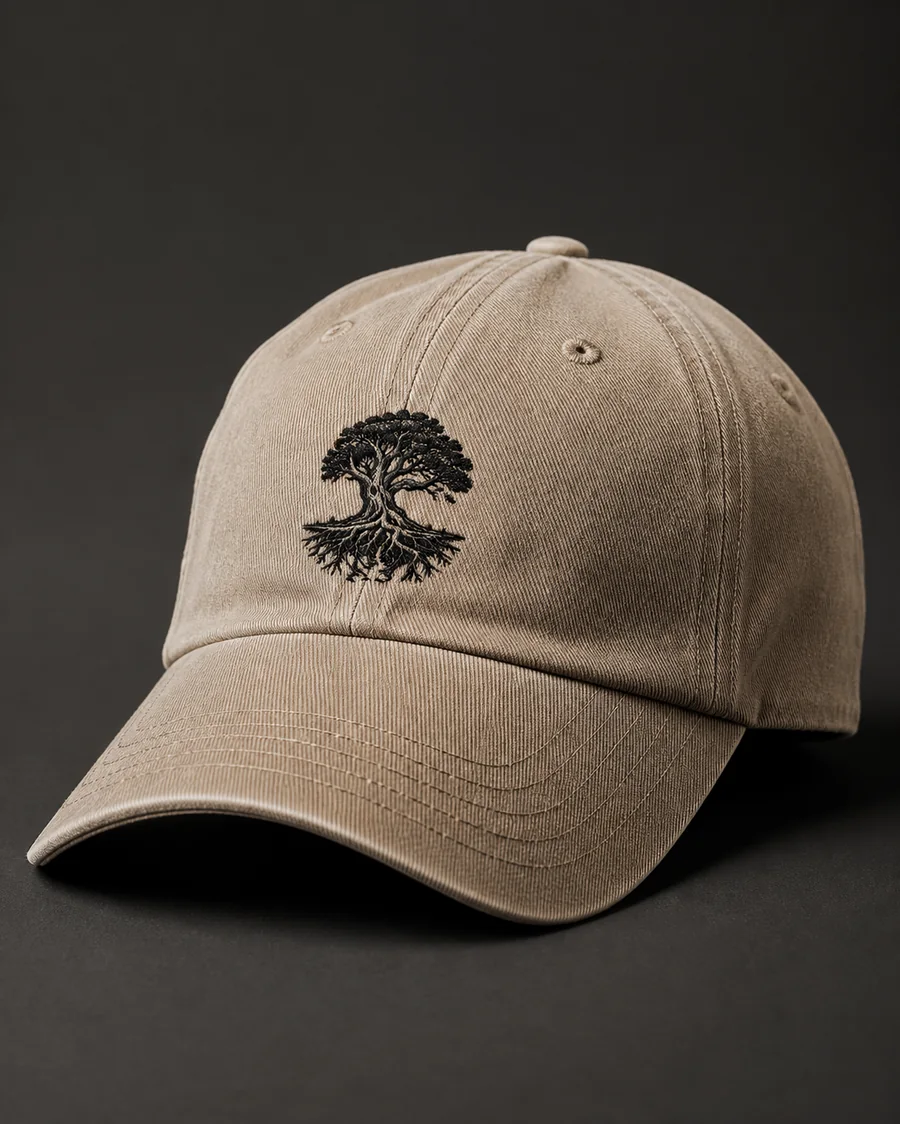
Unstructured six-panel, garment-washed cotton twill, curved brim, brass slide buckle.
Flat embroidery in one thread, front-center. No 3D puff, no oversized logo.
One cap per colorway. Wear it with its own piece or against the whole line.
Drop 01 · The Narrow Path
Limited quantity. No launch spam — one note when the drop opens, and the verse that comes with it.
Matthew 7:14 — narrow is the gate.
Welcome to the path. We'll be in touch before the gate opens.